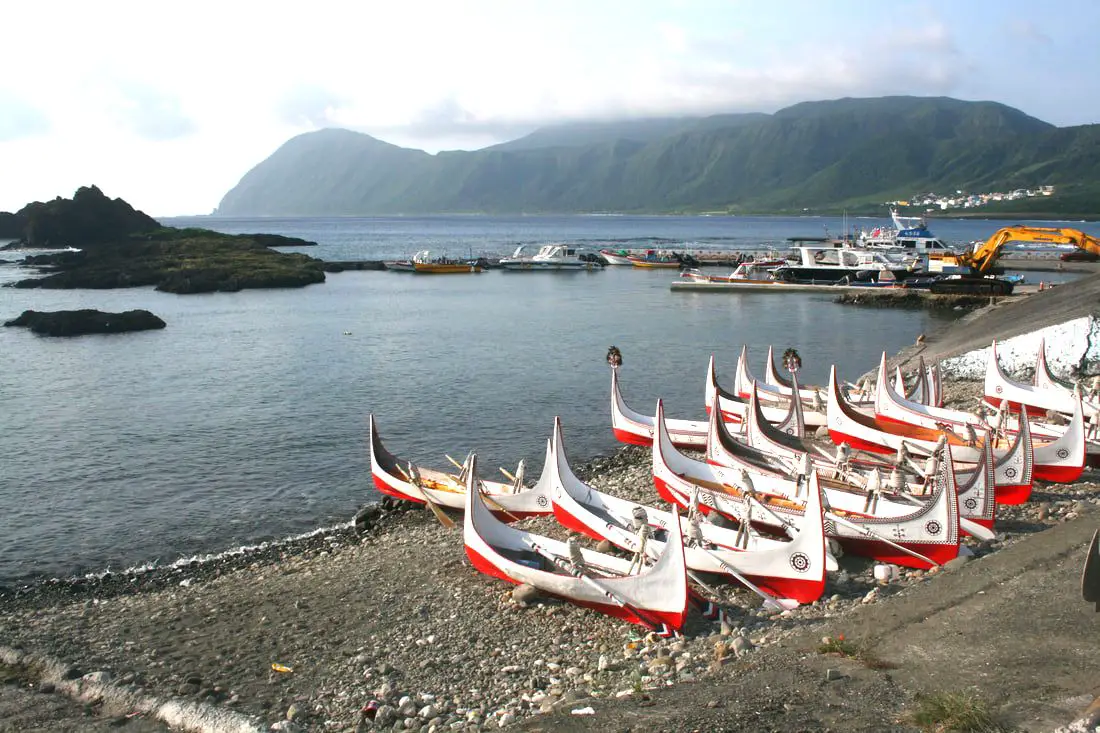
Orchid Island (not to be confused with the Fijian Island of the same name), known in the local Tao language as Ponso No Tao (Island of the people), and in Chinese as Lanyu (蘭嶼) is a secret indigenous people's paradise off the southeastern coast of Taiwan. It is different than any other place in Taiwan, and has the best preserved indigenous culture anywhere in the country. If Taiwan's best tourist activity is experiencing the culture of Taiwan's indigenous peoples, then Lanyu has the best tourist experience anywhere in Taiwan.
Planning your trip to Taiwan? Here are some top travel tips for you:
Background: History: Orchid Island became inhabited about 800 years ago by the Tao indigenous people (達悟族) (aka Yami people 雅美族, which is a name coined by the Japanese, but the native people prefer Tao), which are thought to have traveled from the Batanes Islands in the Philippines, which are a little less than 200 KM away, cut off by the Bashi Channel. However, Orchid Island is very different than the Philippines. Beginning in 1644, some Dutch Sailors were sent to investigate the island, and some settled there among the natives. Because of this, the Island was known as Red Head Island (紅頭嶼) by the Chinese and the Japanese. After the Dutch were defeated in Taiwan, Lanyu was claimed but not controlled by the Qing Dynasty. The Japanese claimed the Island shortly after the Sino-Japanese War in 1895, but protected it as an "ethnological research site" and forbid outsiders from entering. After the Republic of China took over Taiwan following the end of WWII, they continued to ban visitors to the island until 1967, after which tourists were allowed to enter and public schools were built there. Christian missionaries began preaching and living on the island starting in the 1950s, and now basically all native people on the island are Christian (mixed with traditional beliefs). However Christianity was introduced much earlier starting with the Dutch in the 1600s although to a lesser extent. In 1982 a nuclear waste storage plant was built on the south side of the Island without the islanders' consent, causing protests from the inhabitants. Also because of this, the Island inhabitants receive free electricity. The island is volcanic in nature, with the last major eruption being over 5 million years ago. The highest mountain is 552 meters (1,811 feet). Currently there are 2,400 people permanently living on the island, 90% of them being of native Tao descent. Tao Culture: The Tao people number about 2,000 living on Orchid Island, with about another 2,000 living on the Taiwan mainland. The Tao people rely on the sea for survival, and much of their traditions and lifestyle are centered on fishing. The Tao people are mostly Christian but also still practice many of their traditional beliefs. However their ancestral religion included a pantheon of Gods. Traditional roles for men are fishing while roles for women include harvesting taro and sweet potato and weaving. The men usually fish at night or early morning and rest on traditional wooden platforms during the day. Boats are made from planks of wood and are painted red, white, and black. The boat usually has human figures, waves, and the traditional sun image (red and black circles and sun rays) which is said to warn off evil spirits. Boats are considered sacred and the ultimate human creation. There is also a launching ceremony for new boats in which traditional clothes and headgear (such as silver helmets for men and wooden hats for women) are worn, pigs are slaughtered, and the boat is lifted into the air multiple times before being set in the water. Traditional clothes include loin cloths and vests for men, and aprons and vests for women. Young people on the street usually do not wear traditional dress. Flying Fish Festival: There are three basic seasons on Lanyu: one is the flying fish season when flying fish can be easily caught and used and lasts from February to May. The other seasons are from May to October and October to February, when flying fish cannot be caught for ceremonial use. There are many taboos during flying fish season which are discussed below. The Flying Fish Festival lasts from about March to October when flying fish are caught. During this time many ceremonies take place such as for the beginning of the festival, plentiful harvest, etc. During the festival, there are multiple migrations of flying fish species near Lanyu. There are many taboos during this time, especially when it comes to catching and eating flying fish which are the main life source of the Tao people. Weather and Climate: The island has a tropical rainforest climate, with average high temperatures between 20 and 30 degrees year round. The rainy months are in summer, especially due to Typhoons, but the most sunny days are also in summer (expect a lot of sun), and the most rainy days are in winter. Summer is the tourist season, but spring and fall are also popular times to visit. Winters are said to be dreary, cold, and have constant northeastern winds that can stop airplanes and ferries from departing to the island. When to go: The best time to go they say is around May when it is not too hot and there are no northeasterly winds or typhoons which can cancel your transportation to the island. Typhoon season lasts from around June to October. The busy season is during summer break from June to August, during which time it can be hard to book a hostel or airplane ticket. Winter is the less crowded season, but the water will be cold, there will be constant wind (which could cancel transportation), and it will rain more often. Taboos: General Taboos:
How to get there: By Plane: You can book discount air tickets from Taipei to Taitung on KKday here. The only planes to and from Orchid Island come from Taitung. Flight times: As of the time of this blog, there were six flights per day by Daily Air Corporation from about 8 AM to 4 PM (Please note their website is only in Chinese). The flight from Taitung to Lanyu takes about 25 minutes. Please note that the aircraft are small and flights can be cancelled due to high winds or unfavorable weather. Costs: NT 1428 to Lanyu and NT 1360 from Lanyu. You can purchase plane tickets through a tour agency such as Klook or a similar website. By Boat: There are two places that offer ferry rides to Lanyu: Houbihu Harbor (恆春後壁湖漁港) in Pingtung and Fugang Harbor in Taitung (臺東富岡漁港). There are also two ferry companies that operate at both harbors. Both companies leave from both harbors at the same time and arrive at the same time for the same price (2300 NT per person round trip/1150 NT per single trip). Ferry Boat costs: 2300 NT per person round trip (1150 NT per single trip)from both Taitung and Pingtung. Both ferry companies have the same price. Ferry Boat Times: 7:30/7:00 AM departure, 9:30 AM arrival to Lanyu. 12:00/12:30 PM departure, 3:00 PM arrival to Lanyu. 9:30 AM departure from Lanyu, 11:30 arrival to Taitung or Pingtung. 3:00 PM departure from Lanyu, 5:00 PM arrival to Taitung or Pingtung. Both ferry companies depart and arrive at the same time to both locations. You can purchase ferryboat tickets for a discount on Klook here or KKday here. Check out our full Lanyu ferry guide here. Getting around the island: Rent a scooter! The island is small so you should not need to rent a car. You can rent bicycles but you will not be able to travel as fast. You can also hire a driver to take you on tours. Ask your hostel for more rental information. They can help you book a rental in advance. Tours: You can book multiple tours and activities such as a Tribal Tour, Underground House Tour, day hiking, night hiking, snorkeling, scuba Diving, SUPing / Paddle Boarding, and Freediving. You can search for more tours through Klook here or KKday here. Scooter Rental: Price: expect 500 NT per day. You can book a scooter through Klook here or KKday here. Be sure to book your rental in advance, especially during summer weekends. Ask for help from your hostel owner if needed. I am 100% percent certain you do not need a Taiwan local license to rent scooters here, however they may ask for an international license (but I'm fairly sure they will let you rent without one). Helmet wearing is not enforced at all as you will quickly find, but it's still the law. Also be careful to not hit any goats because they wander as they please. There is only one gas station next to Kaiyuan Fishing Harbor. Car Rental: Price: expect 2000 NT per day. You can rent a car for Lanyu on KKday here. Bicycle Rental: Price: Bike rental is about 400 NT per day. You can rent a bike for Lanyu on KKday here. Accommodation: Booking accommodation on the island can be difficult in summer months and on weekends, when rooms can be fully booked for months in advance. There is a nice selection of rooms on Agoda. Here is a list of every registered hostel on the island, but it is in Chinese. My hostel required that I pay for my room in advance via bank wire transfer (this may not be an option if you are a foreign traveler, so make sure they accept credit cards if you do not have a Taiwan bank account). Expect to pay 2000 - 4000 NT per night for a standard double room on Lanyu. You can also book Wifi and SIM cards for Taiwan on Gigago here. Just to let you know, if you book using the links above, we get some commission at no cost to you, and you can help support our blog. You can click here to receive $5 USD on your first Klook purchase. Map: Please see below:
6 Comments
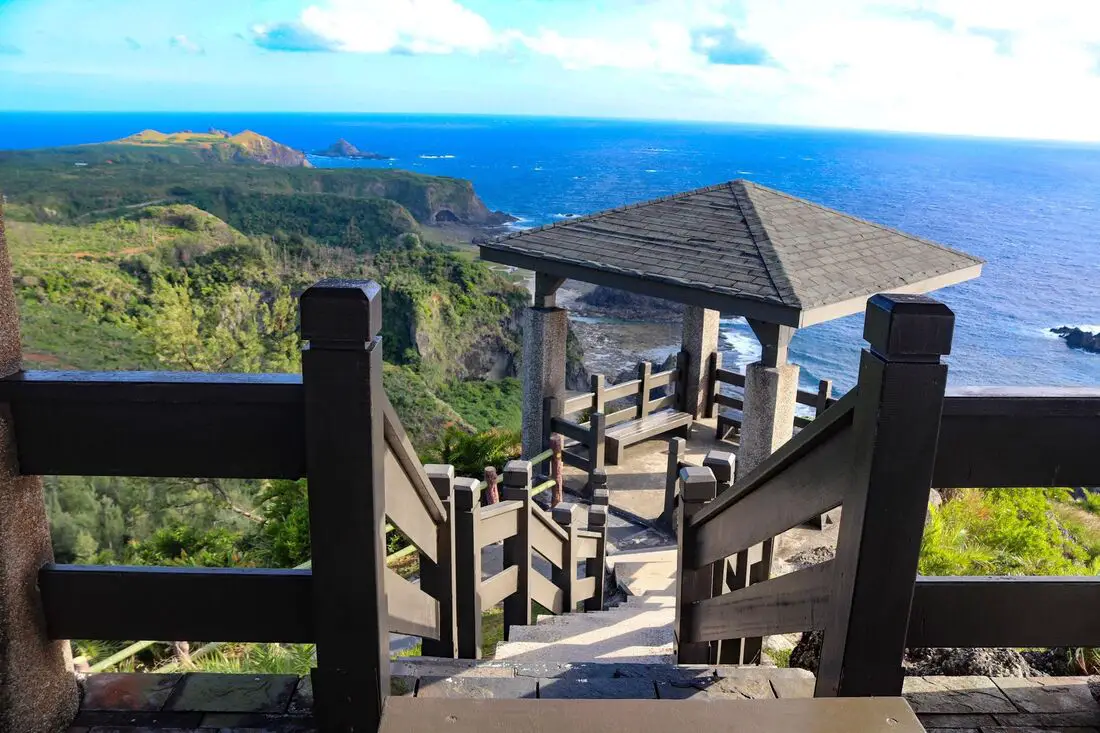
Green Island is a paradise off the southeastern coast of Taiwan. Once a prison for political enemies of the KMT, it is now a tourist hot spot. It is one of the best places to snorkel and dive in Taiwan, one of only three saltwater hot springs in the world, and it also includes amazing volcanic rock formations and scenery all around the island.
Planning your trip to Taiwan? Here are some top travel tips for you:
Background:
Green Island is the remnant of a volcano that formed millions of years ago and is part of the Luzon Volcanic Arc. Today you can see lots of volcanic rock all along the shoreline. Green Island is the seventh largest Island in Taiwan. Green Island became inhabited hundreds of years ago by the Tao indigenous people (達悟族) (aka Yami people 雅美族, which is a name coined by the Japanese, but the native people prefer Tao), which are thought to have traveled from the Batanes Islands in the Philippines, and then to Orchid Island. It was called Jitanasey by the Tao people. It was also known to be inhabited by the Amis Tribe (阿美族) who reside today in Taitung. It was known by the Amis people as Samasana Island. The Island was first settled by Han Chinese fisherman from Xiaoliuqiu Island in 1813, who called the island Huoshandao (火燒島) or Bonfire Island. More Han settlers from Donggang arrived in 1850. In 1937 the American Steamship SS President Hoover ran ground at Green Island and all aboard were saved. To thank the people of Green Island, the US donated to build the Green Island Lighthouse which was designed by the Japanese and finished in 1938, at 33.3 meters or 109 feet high. Green Island also served as a penal colony for political prisoners' during the martial law era of Taiwan, which lasted from the late 9140s to the late 1980s. Some prisoners went on to help form the Democratic Progressive Party. The prison is now open to the public. Currently, the Island is powered by one diesel generator. It also includes an airport. Currently about 4500 people live on the island, and the main industries are tourism and fishing. Weather and Climate: The island has a tropical rainforest climate, with average high temperatures between 20 and 30 degrees year round. The rainy months are in summer, especially due to Typhoons, but the most sunny days are also in summer (expect a lot of sun), and the most rainy days are in winter. Summer is the tourist season, but spring and fall are also popular times to visit. Winters are said to be dreary, cold, and have constant northeastern winds that can stop airplanes and ferries from departing to the island. When to go: The best time to go they say is around May when it is not too hot and there are no northeasterly winds or typhoons which can cancel your transportation to the island. Typhoon season lasts from around June to October. The busy season is during summer break from June to August, during which time it can be hard to book a hostel or airplane ticket. Winter is the less crowded season, but the water will be colder, there will be constant wind (which could cancel transportation), and it will rain more often. Rules to Consider:
How to get there: By Plane: The only planes to and from Green Island come from Taitung City in Southeastern Taiwan. From Taipei, there are daily flights from Songshan Airport to Taitung, where you can switch to Daily Air which will take you the rest of the way to Green Island. You can book discount tickets from Taipei to Taitung on KKday here. Flight times: As of the time of this blog, there were six flights per day by Daily Air Corporation from about 8 AM to 4 PM (Please note their website is only in Chinese). The flight from Taitung to Green Island takes about 15 minutes. Please note that the aircraft are small and flights can be cancelled due to high winds or unfavorable weather. Costs: NT 1428 to Green Island and NT 1360 from Green Island. By Boat: You can purchase boat ferry tickets through a tour agency such as Klook here or KKday here. There are two places that offer ferry rides to Green Island: Houbihu Harbor (恆春後壁湖漁港) in Pingtung and Fugang Harbor in Taitung (臺東富岡漁港). However, to get there from Houbihu you need to stop in Lanyu, so I will focus this blog on departing from Fugang Harbor. There are also about three ferry companies that operate at both harbors. Both companies leave from both harbors at the same time and arrive at the about same times for the same prices (1200 NT per person round trip/600 NT per single trip). Ferry Boat costs: 1200 NT per person round trip (600 NT per single trip) from Taitung. Ferry companies have roughly the same price. Ferry Boat Times*: 7:30 AM departure from Fugang Harbor, 8:20 AM arrival to Green Island. 8:30 AM departure from Green Island, 9:20 AM arrival to Fugang Harbor. 9:30 AM departure from Fugang Harbor, 10:20 AM arrival to Green Island. (permanent set time) 10:30 AM departure from Green Island, 11:20 AM arrival to Fugang Harbor. (permanent set time) 11:30 AM departure from Fugang Harbor, 12:20 PM arrival to Green Island. 12:30 PM departure from Green Island, 9:20 PM arrival to Fugang Harbor. 13:30 PM departure from Fugang Harbor, 14:20 PM arrival to Green Island. (permanent set time) 14:30 PM departure from Green Island, 15:20 PM arrival to Fugang Harbor. (permanent set time) 15:30 PM departure from Fugang Harbor, 16:20 PM arrival to Green Island. 16:30 PM departure from Green Island, 17:20 PM arrival to Fugang Harbor. *Note: the above times change according to the seasons. There may only be one boat per day during winter, while all the boat times may be available during summer break and weekends. Please double check which times are available before you go. You can purchase tickets through a tour agency such as Klook here or KKday here. Getting around the island: Rent a scooter! The island is small so you should not need to rent a car. You can rent bicycles but you will not be able to travel as fast. You can also hire a driver to take you on tours. Ask your hostel for more rental information. They can help you book a rental in advance. Scooter Rental: Price: expect 400 NT per day. You can book a scooter rental for Green Island on Klook here or KKday here. It may be better to book your scooter rental in advance, especially during summer weekends. Ask for help from your hostel owner if needed. I am 100% percent certain you do not need a Taiwan local license to rent scooters here, however they may ask for an international license (but I'm fairly sure they will let you rent without one). Helmet wearing is not enforced at all as you will quickly find, but it's still the law. Also be careful to not hit any goats because they wander as they please. There is only one gas station next to Nanliao Fishing Harbor. Car Rental: Price: expect 2000 NT per day. You can rent a car for Green Island using KKday here. By Bicycle: Cycling is the best way to enjoy Taiwan's landscapes if you have the time and energy. Looking for bicycle rentals in Taiwan? You can search on KKday here and search for tours on Klook here. You can also check out our Taiwan cycling guide here. Accommodation: Booking accommodation on the island can be difficult in summer months and on weekends, when rooms can be fully booked for months in advance. AirBnb has the most choices, however there is also better quality selection on Agoda.com. We stayed at and can recommend Fire Island Guesthouse, which is a high quality B&B on right on the east coast of the island. My hostel did not require that I pay for my room in advance via bank wire transfer (as was the case on Lanyu), but they required me to pay in cash. Expect to pay 2000 - 4000 NT per night for a standard double room on Green Island. Tours and Activities: There are many companies offering snorkeling, diving, SUPing, and other tours on Green Island. You can search for tours on Klook here or KKday here. You can also book discount tickets to Zhaori Hot Spring on KKday here. You can also book Wifi and SIM cards for Taiwan on Gigago here. Just to let you know, if you book using the links above, we get some commission at no cost to you, and you can help support our blog. You can click here to receive $5 USD on your first Klook purchase. Map: Please see a map of all the locations covered in this blog below: Taiwan has quietly become one of Asia's most liveable destinations for people who work remotely. Part of the appeal isn't the food, though that helps. It's the infrastructure. Specifically, it's how easy it is to move around without owning a car, without a driver's license, and often without speaking much Mandarin at all.  https://www.pexels.com/search/ A Transit System Built for Newcomers
Taiwan public transport is, by most measures, one of the most efficient systems in the region. Taipei alone has a metro network covering over 150 kilometers, with trains arriving every two to five minutes during peak hours. The signage is bilingual everywhere—English and Mandarin—so foreigners aren't left guessing which platform leads where. Announcements on trains are also made in multiple languages, including English, Hakka, and Taiwanese Hokkien. For someone who just landed and doesn't yet understand local customs, this matters more than people expect. You can go from the airport to your apartment, then to a coworking space, then to dinner, all using one card and zero confusion. That kind of low-friction movement reduces the daily stress that often makes the first few months abroad exhausting. EasyCard: The Single Tool That Changes Everything If there's one object that defines daily life in Taiwan, it's the EasyCard. This small stored-value card works on buses, the metro, convenience store purchases, bike-share systems, and even some taxis. You tap in, tap out, and the fare is calculated automatically based on distance. Here's why this matters for long-term living in Taiwan:
For digital nomads juggling time zones and client calls, not having to think about transportation logistics frees up mental space. One nomad living in Taichung put it simply: "I spend less time thinking about how I'll get somewhere than I did back home, and that's strange to admit." Staying Connected While You're Moving Around — Including Online Staying Connected While You're Moving Around - Including Online Living abroad long-term means handling more than just physical transportation; it also means managing your digital footprint, especially when you're streaming content, accessing banking apps from your home country, or simply browsing without local restrictions slowing things down. Many expats and remote workers in Taiwan use a VPN while commuting on the metro or working from a café, both for privacy on public Wi-Fi and to access region-specific services. If you're researching options, VeePN Malaysia servers are sometimes used by people based in Taiwan who want a nearby regional server with lower latency for streaming or work tools tied to Southeast Asia. It's a small detail, but for someone managing freelance clients across multiple countries, having a reliable connection during a 40-minute train ride can mean the difference between meeting a deadline and missing one. Cost: How Much Does Getting Around Actually Cost? One of the more pleasant surprises for foreigners in Taiwan is just how cheap transportation is. A single metro ride in Taipei typically costs between NT$20 and NT$65 (roughly USD $0.65 to $2), depending on distance. Monthly unlimited passes are available too, and even frequent riders rarely spend more than NT$1,200 (about $39) per month if they're using the metro daily. Compare that to cities like London or San Francisco, where a monthly transit pass can easily exceed $100. For someone living on a remote salary that may not be huge by Western standards, this cost difference adds up fast. It means more disposable income for rent, food, or simply saving money while living somewhere new. Beyond Taipei: What About Smaller Cities? Not everyone living in Taiwan settles in the capital. Cities like Tainan, Kaohsiung, and Hualien have grown popular among remote workers looking for a slower pace, lower rent, and a stronger sense of community. The good news is that Taiwan's transportation system, while strongest in Taipei, doesn't abandon these areas. Kaohsiung has its own metro and light rail system. Tainan relies more heavily on buses, but they're frequent, and the city is compact enough that many people get by on bikes or scooters anyway. High-speed rail connects most major West Coast cities in under two hours, meaning someone based in Tainan can be in Taipei for a meeting and back home by dinner. Scooters: The Unofficial Backbone of Urban Mobility While trains and buses get most of the attention, scooters are arguably the real backbone of urban mobility in Taiwan. There are over 14 million registered scooters across the country—more scooters than there are people in many nations. For long-term residents, getting a scooter license isn't difficult, and many foreigners eventually do. That said, you don't need one. Public transit alone is sufficient for most daily needs, especially in larger cities. But having the option matters. It means weekend trips to the mountains or coastline don't require renting a car or relying on tour groups. This flexibility is part of what makes expat life Taiwan feel less restrictive than in places where car ownership is essentially mandatory. Why This Matters for Long-Term Travel Plans When people think about long-term travel Taiwan, they often focus on visas, cost of living, or healthcare. Transportation rarely makes the list, yet it shapes daily life more than almost anything else. If getting groceries, attending meetings, or visiting friends requires constant planning and expense, the cumulative stress adds up over months. Taiwan removes that friction. The system works, it's affordable, and it doesn't require fluency in the local language to navigate. For someone deciding between several countries for remote work abroad, that's not a minor detail—it's often the difference between a place feeling temporary and feeling like home. Final Thoughts There's something to be said for infrastructure that simply gets out of your way. Taiwan's public transport doesn't demand attention; it just works, quietly, in the background of daily life. For digital nomads, Taiwan has become a serious contender precisely because of details like this—the unglamorous, practical stuff that makes a place liveable rather than just visitable. Whether you're commuting to a coworking space in Taipei, taking a high-speed train to explore the south, or hopping on a scooter for a weekend trip, the system adapts to you. And for anyone weighing where to settle next, that kind of reliability is worth more than it might initially seem. Taipei has long been celebrated for its night markets, temple-dotted alleys, and mountain-framed skyline. But today, the city is earning a new distinction: a global leader in reimagined urban hospitality. The scenery of the hotels in taipei has evolved dramatically over the past decade, blending Taiwanese cultural identity with world-class service, sustainability, and design innovation. Whether you're here for a weekend escape or an extended business stay, Taipei's accommodation landscape offers something genuinely transformative.
The New Face of Taipei's Hotel Scene Gone are the days when Taipei's lodging options were split simply between international chains and budget guesthouses. Today, the city hosts an extraordinary range of properties, each reflecting a distinct philosophy of what hospitality should feel like. Luxury towers like the Mandarin Oriental Taipei and the Regent Taipei set a global standard with personalized butler services, Michelin-starred dining, and panoramic city views that include a nightly Taipei 101 light show. These aren't just places to sleep, they're curated urban experiences. On the other end of the spectrum, a new wave of design-forward boutique hotels has taken root in neighborhoods like Da'an, Zhongzheng, and Songshan. Properties such as the Hotel Proverbs Taipei and The Lin Hotel marry minimalist Taiwanese aesthetics with locally sourced materials, handcrafted amenities, and art installations by homegrown creatives. Staying in one feels less like checking into a room and more like stepping into a living gallery. Location Matters: Taipei's Distinct Hospitality Zones One of the most interesting aspects of exploring hotels in Taipei is how dramatically the experience changes by neighborhood. Xinyi District is the city's gleaming commercial core, home to flagship luxury hotels and sky-high penthouses. Guests here wake up to views of Taipei 101 and are steps from the best shopping malls, rooftop bars, and contemporary art spaces in the city. Zhongshan District offers a quieter, more residential feel, with tree-lined streets and Japanese-era architecture. Boutique properties here attract creative travelers, design enthusiasts, and those seeking an authentic neighborhood experience rather than a sanitized tourist corridor. Da'an District, where the National Taiwan University campus anchors a vibrant intellectual community, hosts a growing cluster of lifestyle hotels that cater to long-stay guests, academics, and remote workers looking for comfort, community, and cultural depth. Ximending, Taipei's youth culture hub, is packed with capsule hotels, trendy hostels, and affordable guesthouses that make it a magnet for younger travelers and first-time visitors on a budget. What Sets Taipei Hotels Apart: The Hospitality Philosophy The defining characteristic of Taipei's hotel culture isn't the thread count of the sheets or the size of the spa; it's the warmth. Taiwanese hospitality, rooted in the concept of rè qíng (熱情) — genuine, enthusiastic kindness, permeates every level of service. Staff members routinely go beyond the transactional. It's common for concierge teams to personally walk guests to nearby attractions, call ahead to local restaurants to arrange special requests, or prepare handwritten notes with neighborhood recommendations tailored to your interests. This human touch is something even the most algorithmically optimized global chain hotels struggle to replicate. Sustainability and Design: The Next Chapter Taipei's hospitality sector is also becoming a case study in sustainable luxury. Several newer properties are pursuing LEED and WELL Building certifications, integrating green rooftop gardens, rainwater recycling systems, and menus built around seasonal, hyperlocal produce from Taiwan's diverse agricultural regions. The Hotel Eclat Taipei, for instance, has anchored its identity around art, displaying an extraordinary permanent collection of original works throughout the property, from Dalí pieces to Warhol prints — while also investing in energy reduction systems and zero-waste kitchen programs. It's an example of how cultural richness and environmental responsibility can reinforce rather than contradict each other. Tech-Forward Stays Without Losing the Human Element Taipei is one of the most technologically advanced cities in Asia, and that DNA shows up in its hotel rooms. Smart lighting and climate control, AI-assisted multilingual concierge apps, contactless check-in and checkout, and in-room tablets loaded with city guides are increasingly standard features even at mid-range properties. Yet what's notable about Taipei's approach is how technology is used to enhance human connection rather than replace it. Digital tools handle logistics so that staff can focus entirely on meaningful guest interaction, helping visitors navigate local culture, suggest off-the-beaten-path experiences, or simply share a cup of locally grown oolong tea with a story about where it came from. Hotels for Every Type of Traveler For the Luxury Seeker:
For the Design-Conscious Traveler:
For the Budget-Savvy Explorer:
Practical Tips for Booking Hotels in Taipei:
The Verdict: A City That Earns Its Hospitality Reputation Urban hospitality is often discussed in abstract terms: "seamless experiences," "curated stays," "local authenticity." Taipei actually delivers on all of it. The combination of cultural warmth, architectural ambition, culinary depth, and technological sophistication makes the city's hotel landscape one of the most compelling in Asia. Whether you're drawn to a sky-high suite overlooking Taipei 101 or a thoughtfully designed boutique room in a quiet lane lined with bougainvillea, the hotels in Taipei promise more than a comfortable bed. They offer a window into a city that takes genuine pleasure in welcoming the world, one guest at a time. There's a moment that a lot of long-term foreigners in Taiwan eventually hit. At first, renting feels easy. You show up with a few suitcases, find a place near work or school, figure out the MRT, find your favorite breakfast spot, and slowly settle into a routine. Then one year turns into three. Three turns into seven. At some point, you stop thinking of Taiwan as a stop along the way to somewhere else.
That's usually when renting starts to feel different. The apartment that once felt flexible starts to feel temporary. Maybe the landlord won't allow pets. Maybe you're sick of negotiating leases every year or two. Maybe you want to renovate, buy decent furniture, or live near a school, a park, work, or family without wondering if you'll be packing boxes again next year. For some foreigners, the question stops being "Can I live in Taiwan?" and becomes "Am I actually building a life here?" Buying a home in Taiwan isn't purely a financial decision. It's also a question of residency, lifestyle, relationships, and how much flexibility you're willing to give up. The tricky part is that all these questions tend to show up at the same time. First, figure out whether buying is even possible Foreigners can buy property in Taiwan, but not automatically, and not in every situation. The key principle is reciprocity. Taiwan's Ministry of the Interior explains that foreign land acquisition is based on whether the person's home country gives similar rights to ROC nationals. If your country isn't already on Taiwan's reciprocal list, you may need to provide documentation proving that reciprocity exists. Foreign buyers should also remember that some property types and land uses are restricted, so the legal status of the property should be checked before making an offer. This doesn’t mean that buying is off the table. It just means the romantic part of the decision should come after the practical part. Before you fall in love with a place, check your nationality, the land classification, the building's permitted use, and the local registration process. Renting buys you something too People like to say rent is "money down the drain." It's a catchy line, especially after years of wiring money to a landlord. But renting buys something ownership can't: the freedom to change your mind. That matters a lot in Taiwan. Jobs shift. School needs to change. Family situations evolve. Someone who loved Taipei at 29 might want more space in Taichung at 39. A person happy in a small studio near the MRT might later want an elevator building, parking, an extra room, or to be closer to a hospital. Someone on a work-based ARC might see things completely differently after getting an APRC, getting married, starting a business, or thinking about retirement. If you're not sure what the next five years look like, renting can actually be the cheaper kind of freedom. It lets you try out neighborhoods without eating transaction costs, repair bills, taxes, and the emotional weight of being tied down to one address. That's why the better question isn't "Is buying better than renting?" It's "What problem am I actually trying to solve by buying?" If the problem is housing instability, ownership might help. If the problem is money anxiety, ownership might help, or it might not. If the problem is wanting Taiwan to feel permanent, buying can deliver that feeling, but it can also make it a lot harder to leave if your life changes. The down payment doesn't just disappear The biggest mistake people make when thinking about buying is treating the down payment as if it vanishes from the equation. It doesn't. It just shifts from one type of asset to another. Once your savings turn into home equity, they're no longer easy to access. You might feel richer on paper, but you'll have less cash on hand for a career break, a family emergency, a business idea, travel, school fees, or helping out relatives. This matters more for foreigners, since many don't have the same family financial safety net in Taiwan that locals often do. Before turning years of savings into a down payment, it's worth thinking about what that money could grow into if you left it invested or liquid for a few more years. This isn't an argument that investing always beats buying. It's just that the comparison should be honest. A home isn't only a purchase, it's also a decision not to do something else with that same money. "I'll just rent it out later" is a plan worth stress-testing A lot of long-term residents tell themselves the same comforting story: if I ever leave Taiwan, I'll just rent the place out. Sometimes that works out fine. Sometimes it's wishful thinking. A rental backup plan has to hold up against real costs. Mortgage payments are just the starting point. There are repairs, vacancy stretches, dealing with property management, building fees, taxes, insurance, agent commissions, and the inevitable late or difficult tenant. If you've moved abroad, even minor issues get a lot harder to deal with. A leaking pipe stops being a small problem when you're twelve time zones away. Before counting on future rental income, it's worth running the numbers as an actual budget rather than treating it as a reassuring sentence. A place that's great to live in isn't automatically a good rental. A place that rents easily isn't automatically somewhere you'd want to live. They're related questions, but they're not the same question. Appreciation stories can be deceiving Everyone seems to know someone who bought at exactly the right time. A friend who got in early in New Taipei before a new MRT line opened. A relative who bought in Taichung before prices took off. A coworker who bought years ago and now casually mentions the place has doubled in value. These stories are appealing because they're simple. But property appreciation should really be judged over time, not just by the gap between purchase price and sale price. If a home goes from NT$10 million to NT$14 million, that sounds like a NT$4 million win. But the real question is how many years that took, what was spent along the way, what repairs came up, what taxes applied, and what else that money could have done in the meantime. This is where the annual growth rate matters more than the headline number. Looking at the annual pace of growth turns an exciting story into something more grounded. A property can go up in value and still be a mediocre investment if the growth was slow, the costs piled up, or the owner gave up too much flexibility along the way. Taiwan's tax system also separates property costs in ways that can catch newcomers off guard. The Ministry of Finance explains that house tax is based on the current value of the house and its use category, with owner-occupied residential use treated differently from other residential or non-residential uses, and land value tax is handled separately, with special treatment for self-use residential land under certain conditions. None of this makes buying a bad idea. It just means the purchase price isn't the whole story. Buy the life, not just the address The strongest reason to buy in Taiwan often isn't financial at all. Sometimes it's simply about stability. You want your kid to stay in the same school district. You want to be near your spouse's family. You want a home office that's genuinely yours. You're tired of asking a landlord for permission to do anything. You want a dog, a renovated kitchen, some shelves on the wall, or just to stay put in a neighborhood where people know you. Those are real, legitimate reasons. They just shouldn't be dressed up as guaranteed investment logic. A good home purchase should pass two tests. First, does it actually improve your life in Taiwan right now? Second, will it trap you if that life changes? If the purchase only makes sense when prices keep climbing, rent never disappoints, repairs stay cheap, and you never need to leave, that's a pretty fragile foundation. For most foreigners, the honest answer is probably this: buy when Taiwan stops being just where you happen to be living, and becomes where your future is realistically anchored. Until then, renting isn't a failure. It's optionality. Buying a home can be a wonderful step. It can also be an expensive way of avoiding uncertainty. The goal isn't to pick whichever option sounds more "grown up." It's to pick the one that still makes sense once the excitement of the viewing, the agent's enthusiasm, and the dream of permanence have all worn off. 
Jinshan Old Street (aka Jinbaoli Old Street 金包里老街 Jīnbāolǐ lǎojiē) is a popular historical street in Jinshan District of New Taipei. The most famous delicacy here is duck, but you can also find other traditional Taiwanese snacks among the numerous shops and restaurants here. It is definitely worth a stop on your trip to Taiwan's Northern Coast.
Planning your trip to Taipei? Here are some top travel tips for you:
Background:
The first people to live in the Jinshan Area were plains indigenous peoples. The name "Jinabaoli" comes from the Chinese transliteration of the indigenous name of the place. Chinese people began to settle here during the late Ming Dynasty, coming mainly from Fujian, and even more came to settle here during the Qing Dynasty. During the Japanese occupation of Taiwan, a road was built to connect Jinshan to Keelung and Tamsui, making it easier for people to visit. This road was improved in the ROC period to become provincial highway 2. Jinshan now has a population of about 22,000 people. Currently Jinshan Old Street is a popular place to visit for day-trippers from Taipei. Hours: All day until about 7 PM. Price: Free Tours: You can book a walking tour to Jinshan Old Street on Klook here or KKday here. Activities: Don't forget that there are many activities available along Taiwan's Northern Coast such as Wakeboarding, Surfing, Speedboat Surfing, SUP / Paddle Boarding, Diving, Snorkeling Kayaking, Canoeing, Water Biking, River Tracing / Canyoneering, ATVing, Horse Riding, Archery, Tree Climbing, Glamping, Motorcycling, Motorbike Tour, Dragon Boat Racing, Shen'ao Rail Bike, and more on Tripadvisor here, Klook here, or KKday here. Hotels on Taiwan's Northern Coast: We have stayed at and recommend Gold Mountain Ranch, which is a horse ranch and glamping destination in Jinshan. You can book a night at Gold Mountain Ranch on Klook here. You can also check out our full blog on the ranch here. Looking for a hotel? We recommend booking through Booking.com here, which provides the best quality selection of accommodation in Taiwan. Find out where to stay in our Taiwan hotels guide or search for the best hotel deals in Taiwan here. How to get there: By Car/Scooter: From Keelung, take provincial highway 2 north along the coast until you reach Jinshan. The old street is right in the middle of town and there is free parking on the side of the road not far from the old street. If you are looking for car rentals, you can also search Klook here or KKday here. You can also check out our car rental guide here. Looking for scooter rental in northern Taiwan? You can search on Klook here or KKday here to search for options. You can also check out our scooter rental guide here. By Bicycle: Cycling is the best way to enjoy Taiwan's landscapes if you have the time and energy. Looking for bicycle rentals in Taiwan? You can use Taiwan's many Youbike sharing stations, or search for rentals on KKday here, and search for tours on Klook here. You can also check out our Taiwan cycling guide here. You can also book a cycling tour on TripAdvisor here. For more information, check out our Taiwan transportation guide here. By Bus: There are buses that leave from Taipei City Hall station to Jinshan hourly. The ride takes about an hour. You can purchase a discount easy card to use on the MRT and buses from Klook here or KKday here. You can also book an MRT travel pass on Klook here. Map: Please see below: 
Zhongjiao Bay (aka Zhongjiaowan 中角灣, or Zhongjiao Shazhu Wan 中角沙珠灣) is a long sandy beach in Jinshan District of New Taipei, known as the most popular surfing location in Northern Taiwan. It is popular for surfing and swimming, and nearby there are also hikes, interesting rock formations, and the nearby Jinshan Old Street and Jinshan Hot Springs. It is definitely a relaxing place to spend an afternoon. Nearby you can also find other sandy beaches such as Jinshan Beach and Xialiao Beach.
Planning your trip to Taipei? Here are some top travel tips for you:
Background: The first people to live in the Jinshan Area were plains indigenous peoples. The name "Jinabaoli" comes from the Chinese transliteration of the indigenous name of the place. Chinese people began to settle here during the late Ming Dynasty, coming mainly from Fujian, and even more came to settle here during the Qing Dynasty. During the Japanese occupation of Taiwan, a road was built to connect Jinshan to Keelung and Tamsui, making it easier for people to visit. This road was improved in the ROC period to become provincial highway 2. Jinshan now has a population of about 22,000 people. Currently Jinshan Beach is a popular place to visit for day-trippers from Taipei. Due to the shape of the bay facing east, Zhongjiaowan has constant waves year round. Recently the area has been promoted as an international surfing base by New Taipei City. Hours: 24/7 Price: Free Showers: 10 NT per minute - coin operated Activities: You can book surfing lessons at Zhongjiao Bay on Klook here. Tours: You can book a tour to Taiwan's North Coast on TripAdvisor here, Klook here, or KKday here. Hotels: We have stayed at and recommend Gold Mountain Ranch, which is a horse ranch and glamping destination in Jinshan. You can book a night at Gold Mountain Ranch on Klook here. You can also check out our full blog on the ranch here. How to get there: By Car/Scooter: From Keelung, take provincial highway 2 north along the coast until you reach Jinshan and see the sign for Zhongjiaowan. The beach is located northwest from the old street. There is limited free public parking in front of the beach. If you are looking for car rentals, you can also search Qeeq here, Klook here, or KKday here. You can also check out our car rental guide here. Looking for scooter rental in northern Taiwan? You can search on Klook here or KKday here to search for options. You can also check out our scooter rental guide here. By Bicycle: Cycling is the best way to enjoy Taiwan's landscapes if you have the time and energy. Looking for bicycle rentals in Taiwan? You can use Taiwan's many Youbike sharing stations, or search for rentals on KKday here, and search for tours on Klook here. You can also check out our Taiwan cycling guide here. You can also book a cycling tour on TripAdvisor here. For more information, check out our Taiwan transportation guide here. By Bus: There are busses that leave from Taipei City Hall station to Jinshan hourly. The ride takes about an hour. From the city center, the beach is a short walk (1 KM or so) or taxi ride. You can purchase a discount easy card to use on the MRT and buses from Klook here or KKday here. You can also book an MRT travel pass on Klook here. Maps: Please see below: 
The Wanli UFO Houses (aka Futuros) are a neighborhood of abandoned futuristic houses near Wanli Beach (aka Emerald Bay, Green Bay, or Feicuiwan) in Wanli District of New Taipei, and are some of the most popular urban exploration and Instagram destinations in northern Taiwan.
Planning your trip to Taipei? Here are some top travel tips for you:
If you are looking for the Sanzhi UFO houses (三芝飛碟屋), stop looking; the Sanzhi UFO houses were destroyed in 2010. There are UFO houses all around Taiwan, but Wanli has the largest group of these houses. Go see them soon before they are demolished too!
Background: The UFO house village was created in the 1970s by a Taiwanese construction company. At the time during martial law, Wanli beach (Feitsui Bay) was one of the few places that American servicemen could enjoy a beach vacation, as most beaches were closed off at the time. These UFO houses had these servicemen in mind. However, a slowing economy and the severing of official diplomatic ties with the USA prevented the area from taking off, and the UFO resort town fell into decay. Now, only a few hotels are left operating in the area, such as CT Green Bay Hot Spring Hotel, which is still in operation in Wanli, and has great views of the ocean, and includes a hot spring (book on Agoda here or Booking.com here). Because of the harsh winters and short summers along the north coast, many hotels in the area have closed down. For a more complete historical background on this area, check out this blog by Josh Ellis. Common Courtesy When Visiting:
Hours: 24/7 Price: Free Activities: You can book a SUP / Paddle Board experience at Feitsui Bay on KKday here. Tours: You can book a tour to Taiwan's North Coast on TripAdvisor here, Klook here, or KKday here. You can book a Private Laomei Green Reef Day Tour from Taipei on TripAdvisor here or KKday here. Hotels in Wanli: We recommend CT Green Bay Hot Spring Hotel, which is still in operation in Wanli, and has great views of the ocean, and includes a hot spring (book on Agoda here or Booking.com here). Find out where to stay in our Taiwan hotels guide or search for the best hotel deals in Taiwan here. How to get there: By Bus: There are many buses that pass the area. You'll want to get off at Green Bay (翡翠灣). You can purchase a discount easy card to use on the MRT and buses from Klook here or KKday here. You can also book an MRT travel pass on Klook here. By Car/Scooter: Take Provincial highway 2 west out of Keelung, and keep going until you reach the Howard Green Bay Resort. If you are looking for car rentals, you can also search Qeeq here, Klook here, or KKday here. You can also check out our car rental guide here. Looking for scooter rental in northern Taiwan? You can search on Klook here or KKday here to search for options. You can also check out our scooter rental guide here. By Bicycle: Cycling is the best way to enjoy Taiwan's landscapes if you have the time and energy. Looking for bicycle rentals in Taiwan? You can use Taiwan's many Youbike sharing stations, or search for rentals on KKday here, and search for tours on Klook here. You can also check out our Taiwan cycling guide here. You can also book a cycling tour on TripAdvisor here. For more information, check out our Taiwan transportation guide here. Map: Please see below: 
Gold Mountain Ranch and Resort (aka Jinshan Yijing in Chinese, or simply "Horse Camp") is a campground and horse ranch in Jinshan District of New Taipei. A stay here includes activities such as horseback riding, four-wheeling, archery and bb-gun practice, and also a filling BBQ dinner and western style breakfast. Staying here makes you feel like you are in the rural American West, which is a unique experience in Taiwan. With a shortage of ranches and horse riding opportunities in Taiwan, Gold Mountain is a special place that you should not miss on your trip along Taiwan's northern coast.
Background: From my conversation with the Laoban (Boss), Mr. Z, as well as info from their website, Mr. Z. started this ranch about three years ago as a pet project, due to his love of horses. Before that he was in the restaurant business. He said that he searched the entire island for a suitable place for a Horse Ranch, which was his dream, and happened to find this spot of land where the ranch currently operates. When he started the ranch, he would still drive back to Zhonghe every night to take care of his ailing cat. Now he spends all his time taking care of the horses, even sleeping next to them at night in case something goes wrong. Now him and four other employees help to run the campground and ranch. Currently the ranch has 6 horses, about five ATVs, and can accommodate 60 people. Soon they plan to open a restaurant and bar on the property, as well as a wilderness survival training camp. Hours: Check in: 1 PM Check out: 11 AM Price: 1600 NT - 2750 NT per night per person Additional horse rides charged per hour/lesson. You can book a night at Gold Mountain Ranch on Klook here. Website: https://goldmrnr.com/ Facebook Page: https://www.facebook.com/goldmrandr/ (like and share button below)
How to get there:
By Car/Scooter: From Taipei, take National highway 3 north to Wanli, then take provincial highway 2 along the northern coast until you reach Jinshan. Then take provincial highway 2A east to county highway 25, and turn right at Sanhe elementary school. Turn left when you see the sign for "金山驛境." The ranch is at the end of the road. It takes about 50 minutes from Taipei by car. If you are looking for car rentals, you can also search Qeeq here, Klook here, or KKday here. You can also check out our car rental guide here. Looking for scooter rental in northern Taiwan? You can search on Klook here or KKday here to search for options. You can also check out our scooter rental guide here. By Bicycle: Cycling is the best way to enjoy Taiwan's landscapes if you have the time and energy. Looking for bicycle rentals in Taiwan? You can use Taiwan's many Youbike sharing stations, or search for rentals on KKday here, and search for tours on Klook here. You can also check out our Taiwan cycling guide here. You can also book a cycling tour on TripAdvisor here. For more information, check out our Taiwan transportation guide here. By Bus/taxi: There are buses that leave from Taipei City Hall station to Jinshan hourly. The ride takes about an hour. From central Jinshan you can take a taxi (about 200 NT) to the ranch. You can purchase a discount easy card to use on the MRT and buses from Klook here or KKday here. You can also book an MRT travel pass on Klook here. Map: Please see below: 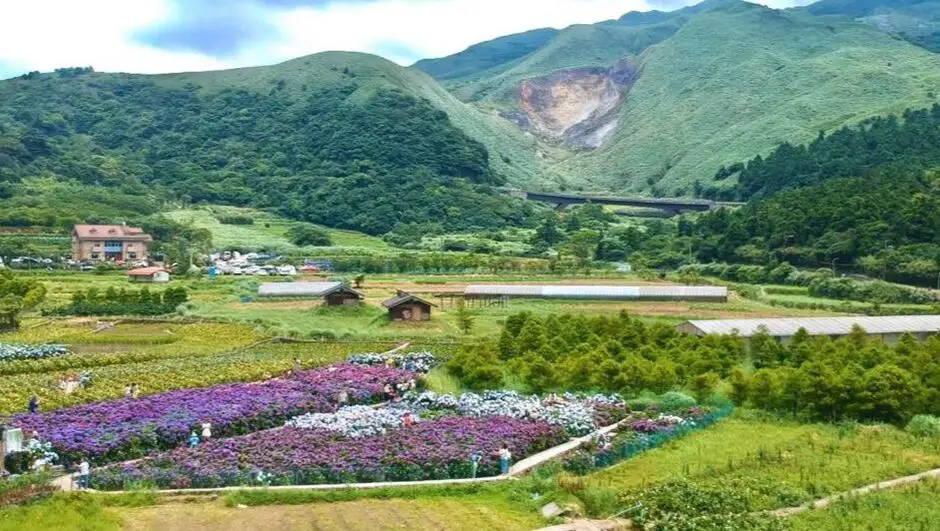
Zhuzihu is a small valley in Yangmingshan National Park (陽明山國家公園 Yángmíng shān guójiā gōngyuán, in Beitou District of Taipei City) between Qixing Mountian and Datun Mountian. The valley is especially fertile due to the rich volcanic soil and abundant rain, and the entire area is full of recreational farms which have become popular tourist destinations. You should definitely stop by on your trip to Yangmingshan.
Planning your trip to Yangmingshan? Here are some top travel tips for you:
Background:
Zhuzihu valley (竹子湖 Zhúzi hú) was formed from lava that flowed out from Datunshan (大屯山 Dà tún shān) and Xiaoguanyinshan (小觀音山 Xiǎo guānyīn shān). Due to its location as a high mountain valley, it rains easily here; annual rain accumulation is about 4500 mm. Before Chinese settlers came to this valley, it was simply a road from the Taipei Basin to the coast, and a hunting ground. In the early 1600s, the first Chinese settlers came to farm here in three main family groups. In 1895, a brief skirmish was fought here between the Japanese and local settlers who did not want to be part of the Japanese empire. The Japanese built hot springs here, experimental farms, a library, and a hiking dormitory. They began planting cabbage and rice here. After the ROC took over Taiwan, cabbage growing became less important, and the farmers here began planting flowers and catering to tourism instead. Now Zhuzihu is one of the most popular spots in Taipei to see flower gardens, mainly white and purple Arum-lilys (海芋 Hǎiyù) and Hydrangea (繡球花 Xiùqiú huā), which bloom from about February to June. Hours: 8 AM to 5 PM (March 13th to June 21st, in 2026) When to go: From late February to early June, when the Arum-lilys and Hydrangea are in bloom. (竹子湖海芋季; 竹子湖繡球花季) Price: 100 NT per person (can be used to purchase drinks, food, or other merchandise) You can book tours to Yangmingshan on TripAdvisor here, Klook here, or KKday here or here. Tours: You can check out tours to Yangmingshan, such as a One-day Yangmingshan NP Beitou Hot Spring Park and Tamsui Tour Package, Beitou and Yangmingshan Day Tour from Taipei, One Day Hike around Yangmingshan, or Private Yangmingshan Volcano Tour and more on TripAdvisor here, Klook here, or KKday here. Hotels in Taipei: High end: We have stayed at and recommend the Yuanshan Grand Hotel, once the tallest building in Taiwan and still the most grand (book on Booking.com here or Agoda here). We also recommend Fullon Hotel which has locations in Tamsui and Fulong near the beach (book on Booking.com here or Agoda here). Budget Hotels: We have stayed at and also recommend Fu Chang Hotel in Ximending, which is within walking distance of Ximending shopping district (book on Booking.com hereor Agoda here). We have also stayed at and recommend Hai Xia Your Home which is right in front of Fulong Beach (book on Booking.com here or Agoda here). Looking for a hotel? We recommend booking through Booking.com here, which provides the best quality selection of accommodation in Taiwan. Find out where to stay in our Taiwan hotels guide or search for the best hotel deals in Taiwan here. How to get there: By Car/Scooter: From Taipei, take provincial highway 2A north to the Zhizihu Lookout. At the roundabout, stay to the left off the main highway and then keep right until you reach the valley. Car parking is limited on weekends and the number of cars allowed up the mountain is also limited. There is free scooter parking everywhere. Looking for scooter rental in Taipei? Check out Qeeq here, Klook here, or KKday here to search for options. You can also check out our scooter rental guide here. If you are looking for car rentals, you can also search Qeeq here, Klook here, or KKday here. You can also check out our car rental guide here. By Bus: From Beitou MRT Station, Take Little Bus 9 (小9) to Fengjiakou Station (風架口). You can book tickets to travel to Taipei via inter-city bus on Klook here. By Bicycle: Cycling is the best way to enjoy Taiwan's landscapes if you have the time and energy. Looking for bicycle rentals in Taiwan? You can use Taiwan's many Youbike sharing stations, or search for rentals on KKday here, and search for tours on Klook here. You can also check out our Taiwan cycling guide here. Map: Please see below: 
Longmen is a scenic coastal biking area near Fulong Beach. Here you can also find sand dunes, a camp ground, and a large sports part. It is a great place to go cycling and enjoy the ocean views.
Planning your trip to Taipei? Here are some top travel tips for you:
Background: "The total distance of Lingmen bikeway is about 5 kilometers, the scenery along the route is very beautiful with green grass, river, and birds. The sea wave is magnificent, you can stand there to look Bitou Cape, Scenery of Laolan Mountain, and sunrise. The natural scenery such as Pacific Ocean, Shuangxi River, Longmen Park, and Yanliao Park, you can ride a bike with your family members to enjoy the scenery here." Fulong Beach lies next to Fulong Village in Gongliao District of New Taipei, at the mouth of the Shuang River. It is special in Taiwan for its rare golden color. The beach has been a popular swimming destination since the Japanese occupation of Taiwan. In 1959, the TRA created public showers and bridge that goes to the other side of the sandbar that you see today. The Fullon hotel resort sits in front of the paid beach and is a popular destination for Taipei residents. Taiwan's fourth nuclear reactor lies in the background of the beach, but it has never been operational and likely never will be due to the anti-nuclear power movement in Taiwan. Near the beach one can go camping at Longmen campground or biking on the Caoling bicycle loop. Price: Free Hours: 24/7 Tours and Activities: There are many activities available here at Longmen such as Windsurfing, SUP /paddle boarding, kayaking, canoeing, sailing, and more on Klook here or KKday here. You can also book tickets to the international Sand Sculpture Art festival on Klook here or KKday here. When to go: May to October when the weather is nice and the water is warm. Winter on the northeast coast is cold and windy. Fulong sand sculpture season dates: April 19th - August 25th (2019). Hotels in Fulong: We recommend Fullon Hotel which has locations in Tamsui and Fulong near the beach (book on Booking.com here, Tripadvisor here, Agoda here, or Hotels.com here). We have also stayed at and recommend Hai Xia Your Home which is right in front of Fulong Beach (book on Booking.com here, Tripadvisor here, Agoda here, or Hotels.com here). Looking for a hotel? We recommend booking through Booking.com here, which provides the best quality selection of accommodation in Taiwan. Find out where to stay in our Taiwan hotels guide or search for the best hotel deals in Taiwan here. How to get there: By Train: Take the TRA train to Fulong Station. Walk straight from the station down to the beach! Book tickets via the normal train (TRA) on Klook here. By Car/Scooter: Take provincial higway 2 from Qidu in Keelung through the mountains past Shifen and Shuangxi until you reach Gongliao on the coast. The beach is right in front of the train station, and there is free parking in front of Dongxing Temple. Looking for scooter rental in Keelung? Search KKday here for options. You can also check out our scooter rental guide here. If you are looking for car rentals, you can also search Qeeq here, Klook here, or KKday here. You can also check out our car rental guide here. By Bicycle: Cycling is the best way to enjoy Taiwan's landscapes if you have the time and energy. Looking for bicycle rentals in Taiwan? You can use Taiwan's many Youbike bike sharing stations, or search for rentals on KKday here, and search for tours on Klook here. You can also check out our Taiwan cycling guide here. For more information, check out our Taiwan transportation guide here. Map: Please see below: 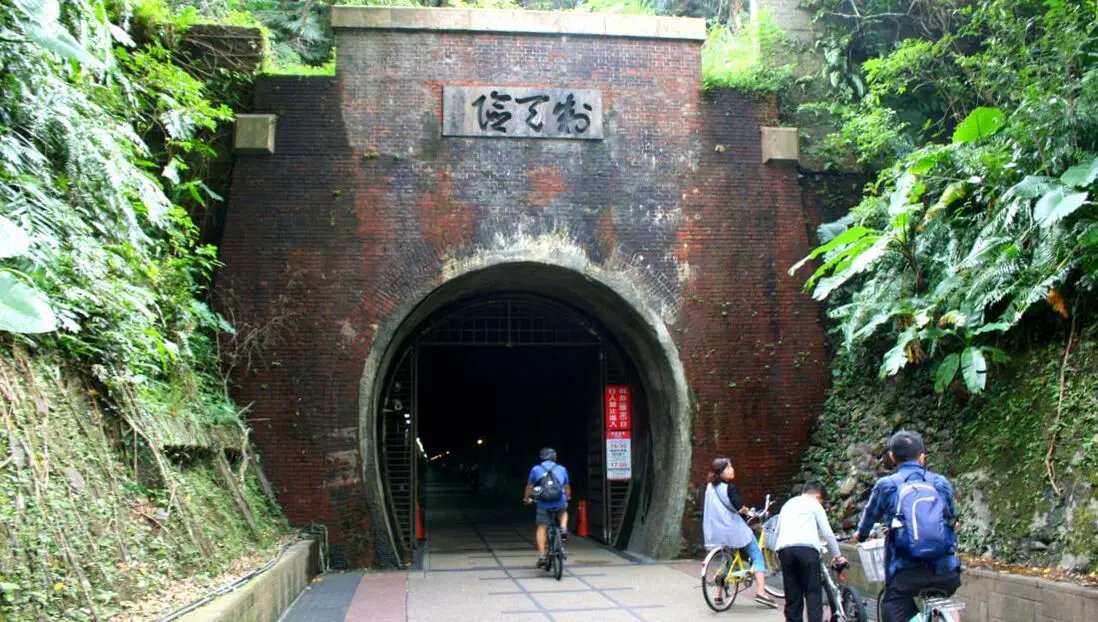
The Fulong-Coaling-Sandiao Cape- bike route is one of the most bike-friendly routes in Taiwan; the roughly 2-hour loop is something that the whole family can enjoy. It includes a 2KM ride through the Old Coaling Railroad Tunnel, as well as a ride along the Sandiao Cape coast on an enclosed bike path, where one can enjoy great views of the ocean, Turtle Island, wavy geological features on the coastline, and historical stone villages along the way. This bike route is highly recommended for people of all ages.
Planning your trip to Taipei? Here are some top travel tips for you:
Background:
The area around Fulong was originally inhabited by the Basay indigenous tribe, who had a village and hunting grounds there. In 1626, the Spanish landed near Fulong and renamed the location Santiago (transliterated from Taiwanese as Sandiao 三貂, as in Sandiao Cape). After the Qing colonized Taiwan, many Fujianese fishermen relocated to the area and began to build the iconic stone houses you can see today. The Old Caoling Tunnel was built in 1924 during the Japanese occupation of Taiwan, and is 2,167 meters long. At the time it was built, it was the longest tunnel in Taiwan. The tunnel took 3 years to build due to delays from Malaria, remoteness of the location, and digging accidents killing 11 people and injuring over 300. The tunnel was only one lane wide, too narrow for electric trains, and so was decommissioned in 1985 and lay waste for 22 years. The tunnel was reopened when the Coaling Bicycle Loop was created in 2007, using the old Coaling Tunnel as its main looping point. Also, along the northeast coast are some old fishing villages that have been around since the Qing Dynasty, including traditional stone houses. One of these historical villages, called Magang (馬崗), is in danger of destruction to make way for a resort. however as Li Yongping out it "The thing that attracts modern travelers most is not 5-star hotels, but history and culture!" Save the Magang Stone Houses! Besides these historical sites, there is amazing scenery along the bike ride, such as views of Turtle Island and long flat sections of layered rock (see below to know what I am talking about). Price: Bicycle Rental: 100-500 NT, depending on the bike Electric Bicycle Rental: 300-400 NT You can search for bike rentals on KKday here and search for tours on Klook here. You can also check out our Taiwan cycling guide here. Riding Time: The whole bike route is about 20 KM and takes 1-2 hours to complete. We were going really slow with many pit stops, and it took us 2 hours. Hours: The Old Caoling Tunnel is open from 8:30 AM - 5:00 PM. It is okay to walk through the tunnel on weekdays, but on weekends, only bike traffic is allowed for safety reasons. When to go: May to October, when the weather is nice and the water is warm. Winter on the northeast coast is cold and windy. Tours and Activities: You can purchase tours and tickets for many activities in Yilan such as Su'ao Crayon Castle, Taipingshan, Turtle Island, Lanyang Museum, Toucheng Leisure Farm, Zhang Mei Ama Capybura Farm, Bambi Land, Yinong Ranch, National Center for Traditional Arts, Taxi Museum, Glamping, Camping, ATV / 4-wheeling experience, SUP / paddle boarding, Ximeng Forest Theater, Surfing, Kayaking, Horse Riding, River Tracing, River Rafting, River Tubing, Pack Rafting, Water Biking, Snorkeling, Canoeing, Shrimping and many others through Klook here or KKday here. Accommodation: Looking for a hotel? We recommend booking through Agoda here, which provides the best quality selection of accommodation on the islands. We have stayed at and recommend Fullon Hotel, which has a location right on the beach in Fulong (you can book on Agoda here, Booking.com here, or Klook here). We have also stayed at Toucheng Leisure Farm, a recreational farm and experience center in Toucheng (you can book on Agoda here, Booking.com here, Hotels.com here, Expedia here, on Klook here, or on Trip.com here). You can also book Wifi and SIM cards for Taiwan on Gigago here. Need travel insurance? Compare prices on Insubuy here. Just to let you know, if you book using the links above, we get some commission at no cost to you, and you can help support our blog. You can click here to receive $5 USD on your first Klook purchase. How to get there: By Train: Take the TRA train to Fulong Station. Walk straight from the station and you will see tons of bike rental shops. You can book tickets to travel to Yilan via inter-city bus on Klook here. You can book tickets to Yialn via high speed rail (HSR) on Klook here or KKDay here. Book tickets via the normal train (TRA) on Klook here. Bicycle rental: Cycling is the best way to enjoy Taiwan's landscapes if you have the time and energy. Looking for bicycle rentals in Taiwan? You can search on KKday here and search for tours on Klook here. You can also check out our Taiwan cycling guide here. By Car/Scooter: Take provincial highway 2 from Qidu in Keelung through the mountains past Shifen and Shuangxi until you reach Gongliao on the coast. The beach is right in front of the train station, and there is free parking in front of Dongxing Temple. From there you can walk to the train station where there are bike rentals everywhere. Looking for scooter rental in Yilan? You can search Klook here or KKday here to look for options. You can also check out our scooter rental guide here. If you are looking for car rentals in Yilan, you can also search Klook here or KKDay here. You can also check out our car rental guide here. Map: Please see below: 
Fulong Beach is my favorite beach in greater Taipei. It is easily accessible by public transportation (TRA Gongliao Station) has beautiful golden sand, a large shallow swimming area, and tons of food options within walking distance. The paid part of the beach features sand sculptures and lifeguards, while the free part of the beach is less clean but there are no annoying lifeguards to whistle at you all the time, making it a foreigner's paradise.
Planning your trip to Taipei? Here are some top travel tips for you:
Safety Precautions:
If you cannot swim and/or do not have a flotation device, avoid wading out on the right side of the beach near the temple, where there is a rip tide. If you are caught in the rip tide, swim perpendicular to shore to escape. If you can’t swim, avoid playing in the water at this part of Fulong beach. The water gets deep and fast quickly. If you go in the water anywhere in Taiwan without a lifeguard, make sure you have a board, fins, or a life jacket, especially if you can’t swim. It’s hard to save someone if they can’t swim and don’t have a flotation device. Having fun in the water takes responsibility. Be safe out there! Background: Fulong Beach lies next to Fulong Village in Gongliao District of New Taipei, at the mouth of the Shuang River. It is special in Taiwan for its rare golden color. The beach has been a popular swimming destination since the Japanese occupation of Taiwan. In 1959, the TRA created public showers and bridge that goes to the other side of the sandbar that you see today. The Fullon hotel resort sits in front of the paid beach and is a popular destination for Taipei residents. Taiwan's fourth nuclear reactor lies in the background of the beach, but it has never been operational and likely never will be due to the anti-nuclear power movement in Taiwan. Near the beach one can go camping at Longmen campground or biking on the Caoling bicycle loop. Price: Fullon Hotel / Sand Sculpture Beach: 220 NT per person. You can book tickets on Klook here or KKday here. Public beach next to Dongxing Temple: Free Hours: Paid Fullon Hotel Beach: 8:00 AM to 5:00 PM (extended to 9 PM on Sat/Sun in summer). You can book tickets on Klook here or KKday here. Public beach next to Dongxing Temple: 24/7 When to go: May to October when the weather is nice and the water is warm. Winter on the northeast coast is cold and windy. Fulong sand sculpture: Check out our full guide to the Fulong Sand Sculptures here. You can also book tickets to the International Sand Sculpture Art Festival on Klook here or KKday here. Tours and Activities: There are many activities available at Fulong such as Windsurfing, SUP /paddle boarding, kayaking, canoeing, sailing, and more on Klook here or KKday here. Hotels in Fulong: We recommend Fullon Hotel which has locations in Tamsui and Fulong near the beach (book on Booking.com here, Tripadvisor here, Agoda here, or Hotels.com here). We have also stayed at and recommend Hai Xia Your Home which is right in front of Fulong Beach (book on Booking.com here, Tripadvisor here, Agoda here, or Hotels.com here). Looking for a hotel? We recommend booking through Booking.com here, which provides the best quality selection of accommodation in Taiwan. Find out where to stay in our Taiwan hotels guide or search for the best hotel deals in Taiwan here. How to get there: By Train: Take the TRA train to Fulong Station. Walk straight from the station down to the beach! Book tickets via the normal train (TRA) on Klook here. By Car/Scooter: Take provincial higway 2 from Qidu in Keelung through the mountains past Shifen and Shuangxi until you reach Gongliao on the coast. The beach is right in front of the train station, and there is free parking in front of Dongxing Temple. Looking for scooter rental in Keelung? Search KKday here for options. You can also check out our scooter rental guide here. If you are looking for car rentals, you can also search Qeeq here, Klook here, or KKday here. You can also check out our car rental guide here. By Bicycle: Cycling is the best way to enjoy Taiwan's landscapes if you have the time and energy. Looking for bicycle rentals in Taiwan? You can use Taiwan's many Youbike bike sharing stations, or search for rentals on KKday here, and search for tours on Klook here. You can also check out our Taiwan cycling guide here. For more information, check out our Taiwan transportation guide here. Map: Please see below: |
Author 作家I am an American expat who has extensive experience living, working, and traveling in Taiwan. In my day, I had to learn many things about Taiwan the hard way. But I have come to learn that Taiwan is one of the best places in the world for Foreigners to live. This blog does not represent the opinions of every foreigner in Taiwan. I am just trying to help others learn more about this beautiful country. Categories
|

- Home
- Travel Guides
-
Taiwan FAQ
-
Blog
- Blog Feed
- Blog Index
- Taiwan Travel Blog
-
Global Expat Travel Blog
>
- Hakka Kitchen
- Bank Comparison
- Snow Hakka
- Mid-Autumn Festival
- Ghost Month
- Taiwan Vs. Thailand
- Morakot
- Gaemi
- Mango Guide
- Sand Fest
- TD 19
- Krathon
- Typhoon Kong-Rey
- Shen'ao Railbike
- Museum of World Religions
- Nanjichang Night Market
- Popsmile Tourist Factory
- Taiwan Science Center
- Taiwan Better Than Thailand
- Hualien Besides Taroko
- Taiwan Car Rental Guide
- Lunar/Chinese New Year Guide
- Taiwan Lantern Festival Guide
- Tomb Sweeping Festival
- Taiwan Cherry Blossom Guide
- Children's Day
- Firefly Guide
- Maps
-
About
- About
- Contact
- Twitter (X)
- YouTube
- Current Time and Date in Taiwan
- Privacy
-
More
>
-
Taiwan Travel Blog Posts
>
- Guide to Taiwan
- Taiwan’s Outer Islands. >
- Taiwan Cycling Guide – The Ultimate Guide to the Bicycle Kingdom 台灣騎自行車指南
- The Ultimate Taiwan Scooter/Motorcycle Rental Guide 在臺灣租機車
- The Ultimate Taiwan Car Rental Guide – Save Money on Your Next Trip 臺灣租汽車指南
- Camping in Taiwan Guide – Everything you Need to Know 在台灣露營常見問題
- Taiwan Blogroll – Top English Blogs to Follow for All Things Taiwan
-
The Ultimate Travel Guide to Taipei 臺北旅遊指南
>
- Yangmingshan National Park 陽明山懶人包 – Your Complete Travel Guide
- Ultimate Guide to Taipei’s Old Streets 台北老街指南
- The Ultimate Travel Guide to Pingxi and Shifen 平溪懶人包
- The Ultimate One-Day Taipei Itinerary 一天在臺北怎麽旅遊
- The Ultimate Guide to Taipei’s Night Markets 臺北夜市指南
- The Most Awesome Day Trips from Taipei 台北一日遊景點
- The Complete 2025 Beitou Hot Springs Guide: Soak Like Royalty 北投溫泉英文指南
- The Best Views of the Taipei 101 (Best Places to see New Year’s Fireworks) 欣賞101煙火的最佳地點
- The Best Beaches Near Taipei: North Taiwan’s Top 10 台北前10名的沙灘 >
- Tamsui Travel Guide – Taipei’s Amazing Historic Riverside Town 淡水最佳的景點
- Taipei’s Waterfall Guide – Explore the City’s Most Breathtaking Falls 台北瀑布指南
- Taipei Museum Guide – Discover the Best Museums in Taipei 臺北博物館指南
- Taipei City Hiking Guide – The Best Hikes in Taipei 台灣爬山指南
- Taipei 101: The Ultimate Guide to Taiwan’s Tallest Tower (臺北101)
- Shifen Waterfall and Old Street Travel Guide: Everything You Need to Know Before You Go
- Qingtiangang Grassland: See Amazing Views and Buffalo Close-Up 擎天崗
- Our Travel Guide to Wulai – Taipei’s Amazing Mountain Paradise (烏來旅遊指南)
- Jiufen Old Street – Taiwan’s Amazing Mountainside Village 九份老街
- Dihua Street and Dadaocheng – Taipei’s Amazing Historical Hipster Paradise 迪化街及大稻埕
- Children and Parent’s Travel Guide to Taipei 小孩及家長台北旅遊指南
- Taiwan’s Northern Coast Travel Guide – Discover a Beautiful and Amazing Coastline 台灣北海岸懶人包 >
- Keelung Travel Guide – Best Places to See in the Harbor City 基隆旅遊指南
- Taoyuan Travel Guide – More Than Just an Airport City 桃園旅游懶人包
- Travel Guide to Hsinchu 新竹懶人包 – Taiwan’s Charming Tech Hub
- Miaoli Travel Guide – Discover this Amazing Mountainous Backwater 苗栗旅遊懶人包 >
- Taichung Travel Guide 台中旅遊懶人包 – Discover Central Taiwan’s Hidden Secrets
- Gaomei Wetlands – Complete Guide to Taichung’s Amazing Wildlife Area 高美濕地
- Nantou Travel Guide – Taiwan’s Most Stunning Mountain Getaway 南投縣懶人包
- Sun Moon Lake Travel Guide – Taiwan’s Most Beautiful Lake 日月潭旅游指南
- Changhua Travel Guide – Fall in Love with Taiwan’s Historical Central County 彰化懒人包
- Chiayi Travel Guide – Best Places to Visit, Eat & Explore 嘉義懶人包
- Alishan 阿里山 – Taiwan’s Ultimate Mountain Destination
- Alishan Forest Railway Travel Guide (阿里山森林鐵路) – Taiwan’s Most Scenic Rail Line
- Yunlin Travel Guide 雲林旅遊懶人包 – A Rural Wonderland in Southwest Taiwan
- Tainan Travel Guide: Discover Taiwan’s Oldest City & Ultimate Foodie Paradise – 臺南懶人包
-
Travel Guide to Kaohsiung – Southern Taiwan’s Most Vibrant City 高雄旅遊懶人包
>
- Tianliao Moon World Travel Guide 田寮月世界 – Taiwan’s Out-of-this-World Geopark
- Qijin (Cijin) Island Travel Guide – Koahsiung’s Best Beach Destination 旗津懶人包
- Maolin Travel Guide 茂林旅游懶人包 – Our Favorite Place in Taiwan
- Monkey Mountain (Shoushan) 壽山 – Taiwan’s Best Monkey-Spotting Location
- Lotus Pond Travel Guide 蓮池潭 – Kaohsiung’s Scenic Temple Area
- Cheng Ching Lake Ultimate Travel Guide 澄清湖完整導覽
- Pingtung Travel Guide – Explore Taiwan’s Sunniest County 屏東旅遊懶人包
- Kenting Travel Guide 墾丁懶人包 – The Best Beaches in Taiwan
- Travel Guide to Yilan 宜蘭懶人包 – Beaches, Mountains, Hot Springs, and more
- Guide to Toucheng 頭城懶人包 – Yilan’s Amazing Seaside Paradise
- Taipingshan Travel Guide 太平山 – Discover Yilan’s Amazing Mountain Scenery
- Our Guide to Taiwan’s East Coast 台灣東海岸指南 – Taiwan’s Most Beautiful Coastline
- Taiwan’s East Rift Valley (Huadong Valley) Travel Guide 花東縱谷旅遊指南 – The Most Beautiful Places in Taiwan
- Taitung Travel Guide – Top Things to Do in Taiwan’s Outdoor Tourism Paradise 台東懶人包
- Taiwan National Public Holiday Guide 台灣國定假日指南
- The Ultimate Taiwan Hotel Guide 臺灣飯店指南
- The Ultimate Taiwan SIM Card, eSIM, and Portable Wi-Fi Guide
- The Ultimate Taiwan Transportation Guide 台灣交通常見問題
- The Ultimate Taiwan Butterfly Watching Guide 台灣賞蝴蝶指南
- The Ultimate Foreigner’s Guide for Surviving in Taiwan 外國人在台灣存活指南
-
Taiwan Travel Blog Posts
>
 RSS Feed