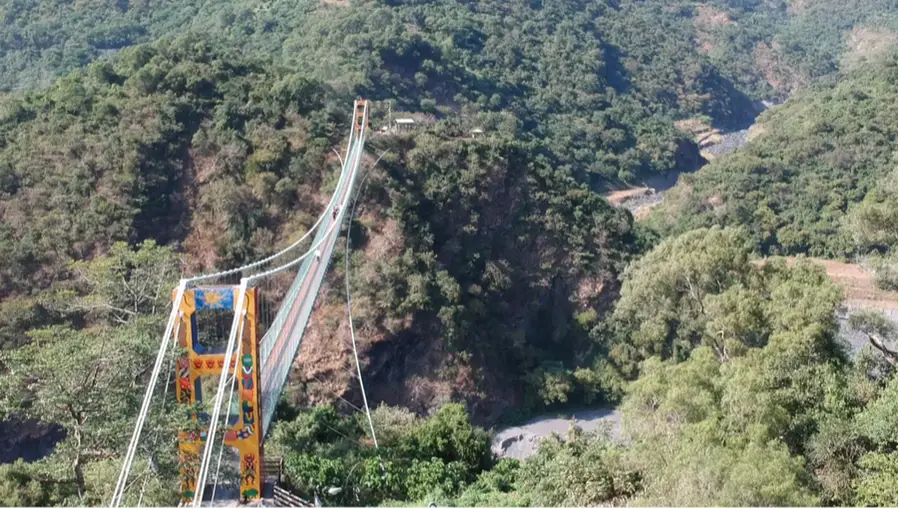
Duona Suspension Bridge (aka Duonagao Suspension Bridge 多納高吊橋) is the highest pedestrian suspension bridge in Southeast Asia, featuring amazing views of the Zhuokou River and Maolin's mountainous landscape. The bridge is part of a trail that connects the top of a ridge-line, giving hikers 360 views of the river valley and surrounding landscape.
Planning your trip to Kaohsiung? Here are some top travel tips for you:
Background: The Duona Suspension bridge is the highest in Southeast Asia and the highest bridge in Taiwan. It is 232 meters long (761 feet) and 103 meters tall (338 feet). It was completed during the Japanese Colonial Era (early 1900's) and was the main connection between the Rukai tribe living at Duona Village to the rest of Taiwan. The bridge was renovated in 1997 and 2015. Car and scooter traffic have been officially banned after 2015, although local residents still ride over it. Duona Great Bridge sits in the Eagle Valley (老鷹谷) next to Duona Suspension Bridge and allows two lanes of motor traffic. It was completed in 2012. Before it was built, another bridge that crossed the river there was destroyed during the floods of Typhoon Morakot (aka eight-eight flood or 八八水災). Typhoon Morakot brought record floods to Taiwan because it slowly moved over the island delivering torrential rain. Nearly 700 people were killed during the disaster (to see what Maolin looked like right after the flooding, check out this blog here). Basically all the bridges in Maolin were destroyed during Typhoon Morakot in 2009 except Duona Suspension bridge which is built so high that it would never be affected by floodwater. Most all the bridges currently in Maolin were reconstructed after the 2009 floods. Price: Free Hours: 24/7 Maolin Butterfly Season: Maolin's Butterfly Migration is from September to March every year. Check out our full Maolin Butterfly Season Guide here. How to get there: Take Maolin Forest Road (Kaohsiung City Road 132) to Wanshan Village, after which turn left toward Meiya Valley 美雅谷 at the top of the ridge, and continue right until you come to the suspension bridge. Technically you should park your car there and walk to the suspension bridge, but there are also spots to park closer to the bridge. Looking for scooter rental in Kaohsiung? You can check out Klook here or KKday here to search for options. You can check also out our scooter rental guide here. If you are looking for car rentals, you can search Qeeq here, KKday here, or Klook here. You can also check out our car rental guide here. Accommodation We have stayed at and recommend Chao She Hotel (you can book on Agoda here, Booking.com here, Hotels.com here, or Expedia here) IHI Sanduo Travel Hotel (you can book on Agoda here, Booking.com here, Hotels.com here, or Expedia here), and Mingli Hotel (you can book on Agoda here, Klook here, or Hotels.com here) which are three inexpensive and high quality choices in downtown Kaohsiung. I also have stayed at and recommend Kaohsiung Meinong Rabbit Paul Homestay B&B (you can book on Agoda here, Booking.com here, or Trip.com here), a quiet B&B in rural Meinong, and Chengching Lakeside Resort (you can book on Agoda here, Booking.com or Trip.com here)and the Grand Hotel Kaohsiung (you can book on Agoda here, Booking.com here, Hotels.com here, or Expedia here) which both offer breakfast buffet and free entrance into Chenqing Lake Park. I have also stayed at the 85 sky tower which offers great views of the city; you can search for rooms in the 85 sky tower on Agoda here, Booking.com here, Hotels.com here, Expedia here, or Trip.com here). Find out more about where to stay in our Taiwan hotels guide or search for the best hotel deals in Taiwan here. We recommend booking through Agoda here, which provides the best quality selection of accommodation on the islands. You can also book Wifi and SIM cards for Taiwan on Gigago here. Need travel insurance? Compare prices on Insubuy here. Tours: You can find more tours and activities in Kaohsiung such as Pier 2, Meinong Hakka Museum, Hamasen Railway Museum, Suzuka Circuit Park, i-Ride Kaohsiung Visual 5D Flying Theater, National Science and Technology Museum , Senya Village Restaruant, Austin Land, Ski School Indoor Ski Slope, and many more on Klook here or KKday here. Just to let you know, if you book using the links above, we get some commission at no cost to you, and you can help support our blog. You can click here to receive $5 USD on your first Klook purchase. Map: Please see below:
1 Comment
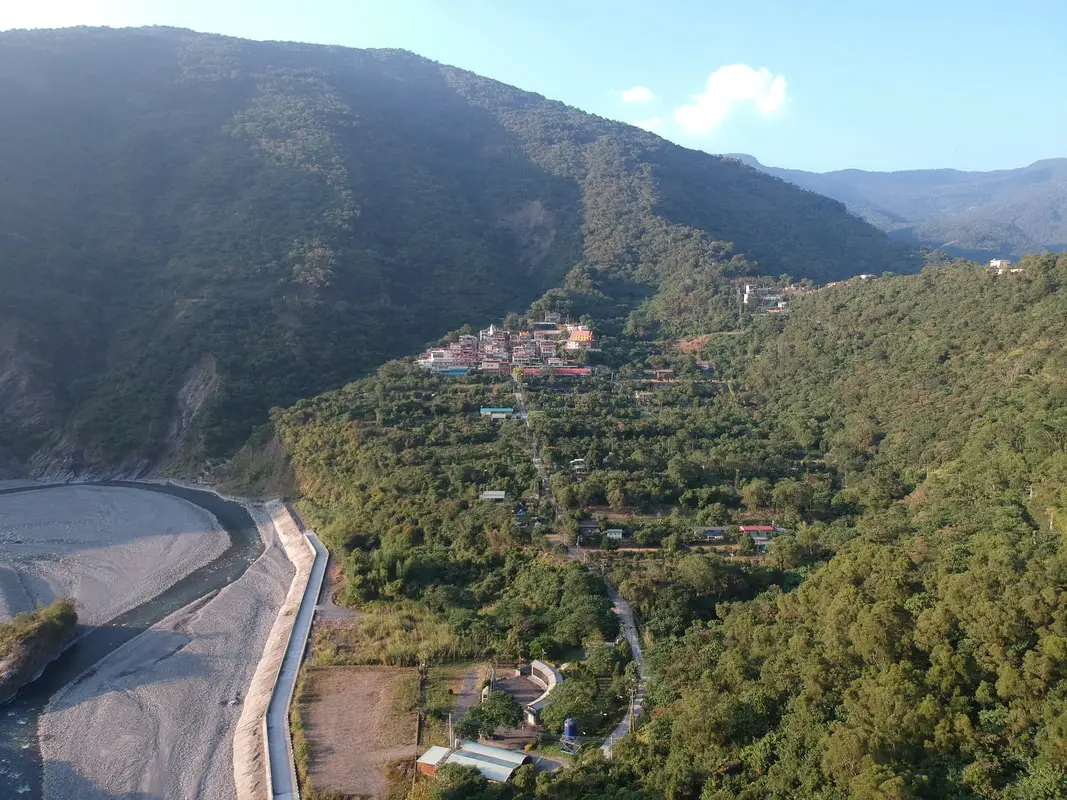
Maolin District of Kaohsiung City is my favorite place in Taiwan, and in Maolin I have spent the most time in Wanshan Village, thanks to a man named Ahbei.
Wanshan is a small village that lies on a mountain slope between Maolin Village and Duona Village. Near the village are waterfalls, streams, hot springs, and great views. Popular activities include swimming, hot spring bathing, river tracing, camping, and hiking. Planning your trip to Kaohsiung? Here are some top travel tips for you:
Background: Wanshan has the smallest population of any village in Taiwan according to the government website here, with a population of just 450 people. 95% of the people are aborigines from the Rukai Tribe (魯凱族), and the rest are either from the Wulu Bunun Tribe (布農) or Han Chinese. Originally the people of Wanshan village lived at the base of Mali Mountain (麻里山), but were moved by the government in 1956 to their current location. Many of the inhabitants of Maolin were originally located elsewhere, but had to relocate their home or village due to typhoons or unsafe terrain. There are a few abandoned villages around Maolin that you can still hike to. One special thing about Wanshan Village is that the intercom speaker from the elementary school (the only school in the village) is within earshot of everyone that lives in the village, so communication from the village leadership is easily passed on (and everyone gets woken up by it in the morning). Price: Free Hours: 24/7 Maolin Butterfly Season: Maolin's Butterfly Migration is from September to March every year. Check out our full Maolin Butterfly Season Guide here. When to go: I recommend going in the summer time when the waterfalls have plenty of water and warm temperatures make it a great time to go swimming. In winter it will be cold and the waterfalls can dry up. However in summer be careful of Typhoons. If there is a Typhoon, the inhabitants of Maolin will be evacuated, and you should not try to go in for your own safety. On the other hand if you want to go just for hiking, winter would be a better time to go. If you are coming to see butterflies, the butterfly migration is in the fall and ends roughly in November. How to get there: By Car: Maolin can be reached via provincial highway 27 from Pingtung or Liugui. Once you come to Dajin Bridge, go straight up the mountain. Looking for scooter rental in Kaohsiung? You can check out Klook here or KKday here to search for options. You can check also out our scooter rental guide here. If you are looking for car rentals, you can search Qeeq here, KKday here, or Klook here. You can also check out our car rental guide here. By Bus: You can take a bus there but I don't recommend it. It's a 3 hour bus ride from Pingtung Bus Station. If you can rent a car or scooter it is about a 1.5 hour drive from downtown Kaohsiung. You can book tickets to travel to Kaohsiung via inter-city bus on Klook here. You can book tickets to Kaohsiung via high speed rail (HSR) on Klook here or KKDay here. Book tickets via the normal train (TRA) on Klook here. You can also book a Kaohsiung Travel pass here. Accommodation We have stayed at and recommend Chao She Hotel (you can book on Agoda here, Booking.com here, Hotels.com here, or Expedia here) IHI Sanduo Travel Hotel (you can book on Agoda here, Booking.com here, Hotels.com here, or Expedia here), and Mingli Hotel (you can book on Agoda here, Klook here, or Hotels.com here) which are three inexpensive and high quality choices in downtown Kaohsiung. I also have stayed at and recommend Kaohsiung Meinong Rabbit Paul Homestay B&B (you can book on Agoda here, Booking.com here, or Trip.com here), a quiet B&B in rural Meinong, and Chengching Lakeside Resort (you can book on Agoda here, Booking.com or Trip.com here)and the Grand Hotel Kaohsiung (you can book on Agoda here, Booking.com here, Hotels.com here, or Expedia here) which both offer breakfast buffet and free entrance into Chenqing Lake Park. I have also stayed at the 85 sky tower which offers great views of the city; you can search for rooms in the 85 sky tower on Agoda here, Booking.com here, Hotels.com here, Expedia here, or Trip.com here). Find out more about where to stay in our Taiwan hotels guide or search for the best hotel deals in Taiwan here. We recommend booking through Agoda here, which provides the best quality selection of accommodation on the islands. You can also book Wifi and SIM cards for Taiwan on Gigago here. Need travel insurance? Compare prices on Insubuy here. Tours: You can find more tours and activities in Kaohsiung such as Pier 2, Meinong Hakka Museum, Hamasen Railway Museum, Suzuka Circuit Park, i-Ride Kaohsiung Visual 5D Flying Theater, National Science and Technology Museum , Senya Village Restaruant, Austin Land, Ski School Indoor Ski Slope, and many more on Klook here or KKday here. Just to let you know, if you book using the links above, we get some commission at no cost to you, and you can help support our blog. You can click here to receive $5 USD on your first Klook purchase. Map: Please see below: 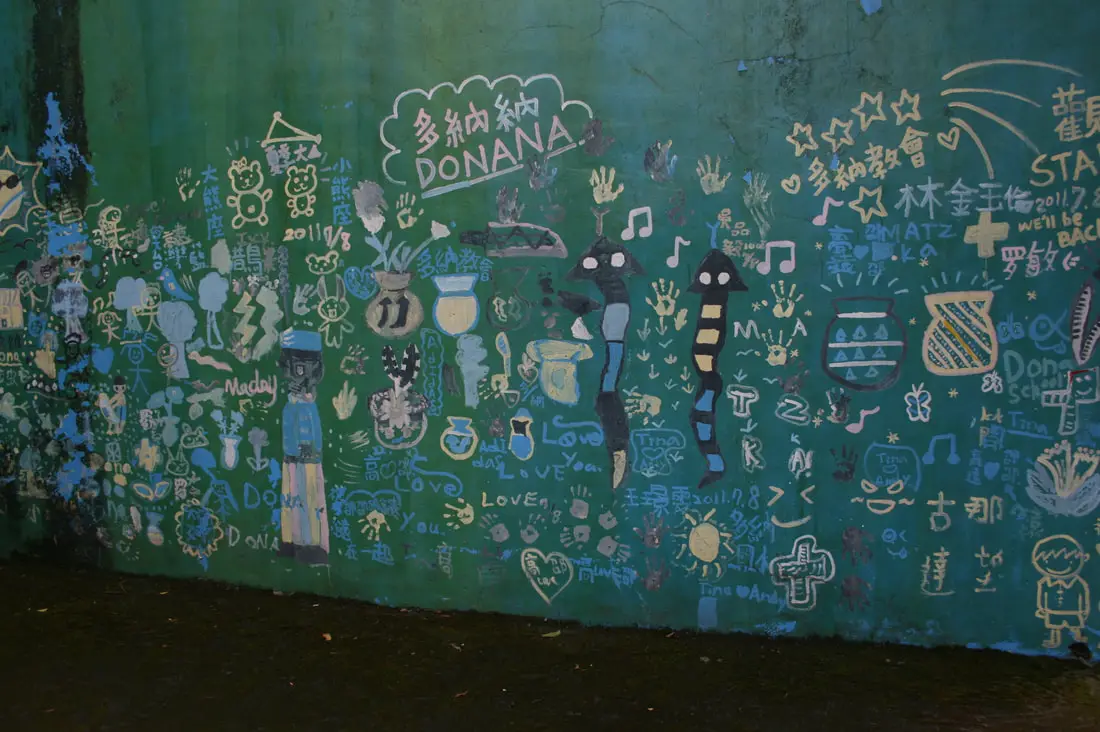
Duona Village in Maolin (Aka Duona Tribe, Tona, or Kungadavane 多納部落) is one of the oldest inhabited tribal villages in Taiwan, home to people of the Rukai Tribe. The village features a street full of traditional foods and restaurants, intact aboriginal culture, traditional stone houses, as well as nearby rivers, waterfalls, and hiking trails for tourists to explore.
Planning your trip to Kaohsiung? Here are some top travel tips for you:
Background:
Duona is the most remote village in Maolin District of Kaohsiung City, and is said to harbor the most complete version of the Rukai Aborigine culture. The Rukai People first began to move into the area now known as Duona about 300 years ago (1700s), making it one of the oldest aborigine villages in Taiwan. Most of the people live in traditional stone houses made from nearby plentiful shale rock, which are characteristic of the Rukai Tribe. The stone houses are warm in the winter and stay cool during the summer. Near the village is a small plain which is said to be the home of Taiwan's indigenous species of black rice. The village was almost completely cut off from the outside world until the Japanese built the Duona Suspension Bridge, which helped to link it to the rest of Taiwan as well as better control the native population. The village sits at about 450 meters above sea level and has around 600 inhabitants. There is one elementary school in the village (its only educational institution) and one police station. The actual village boundaries extend to Pingtung County and Taitung County, and include largely untouched and "virgin" forests and mountain wilderness areas such as Shuang-guei Lake, providing precious wildlife habitat for many of Taiwan's indigenous animals and plants. Hours: 24/7. However most of the restaurants on Duona Alley are only open from 8 AM to 5 PM. Maolin Butterfly Season: Maolin's Butterfly Migration is from September to March every year. Check out our full Maolin Butterfly Season Guide here. Accommodation We have stayed at and recommend Chao She Hotel (you can book on Agoda here, Booking.com here, Hotels.com here, or Expedia here) IHI Sanduo Travel Hotel (you can book on Agoda here, Booking.com here, Hotels.com here, or Expedia here), and Mingli Hotel (you can book on Agoda here, Klook here, or Hotels.com here) which are three inexpensive and high quality choices in downtown Kaohsiung. I also have stayed at and recommend Kaohsiung Meinong Rabbit Paul Homestay B&B (you can book on Agoda here, Booking.com here, or Trip.com here), a quiet B&B in rural Meinong, and Chengching Lakeside Resort (you can book on Agoda here, Booking.com or Trip.com here)and the Grand Hotel Kaohsiung (you can book on Agoda here, Booking.com here, Hotels.com here, or Expedia here) which both offer breakfast buffet and free entrance into Chenqing Lake Park. I have also stayed at the 85 sky tower which offers great views of the city; you can search for rooms in the 85 sky tower on Agoda here, Booking.com here, Hotels.com here, Expedia here, or Trip.com here). Find out more about where to stay in our Taiwan hotels guide or search for the best hotel deals in Taiwan here. We recommend booking through Agoda here, which provides the best quality selection of accommodation on the islands. You can also book Wifi and SIM cards for Taiwan on Gigago here. Need travel insurance? Compare prices on Insubuy here. Tours: You can find more tours and activities in Kaohsiung such as Pier 2, Meinong Hakka Museum, Hamasen Railway Museum, Suzuka Circuit Park, i-Ride Kaohsiung Visual 5D Flying Theater, National Science and Technology Museum , Senya Village Restaruant, Austin Land, Ski School Indoor Ski Slope, and many more on Klook here or KKday here. Just to let you know, if you book using the links above, we get some commission at no cost to you, and you can help support our blog. You can click here to receive $5 USD on your first Klook purchase. How to get there: Take Maolin Forest Road (Kaohsiung City Road 132) past Wanshan Village and continue on to Duona Village, the last town on the road. There will be a left turn onto Duona Alley, the main road in the village. Looking for scooter rental in Kaohsiung? You can check out Klook here or KKday here to search for options. You can check also out our scooter rental guide here. If you are looking for car rentals, you can search Qeeq here, KKday here, or Klook here. You can also check out our car rental guide here. Map: Please see below: 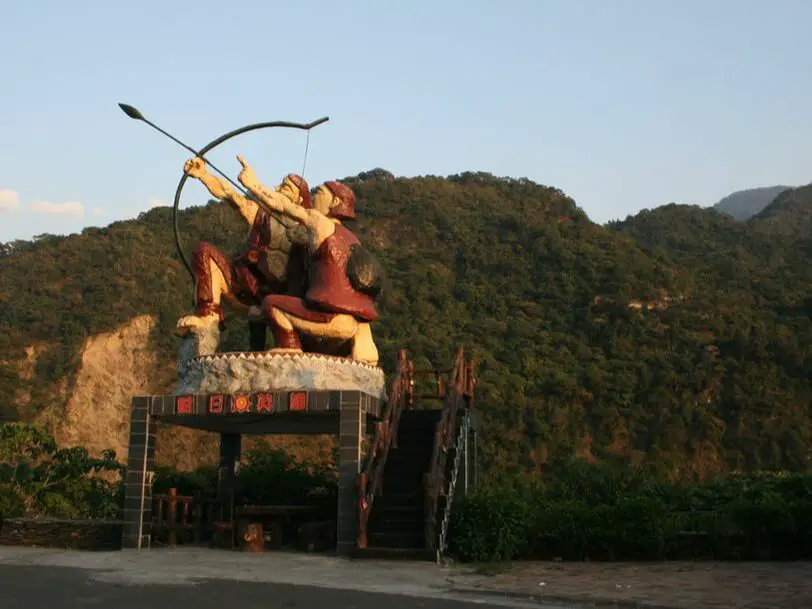
Maolin Village is the first and largest village you come across in the mountainous Maolin District of Kaohsiung. It features an aboriginal cultural sights, waterfalls, swimming holes, delicious food, and much more to be explored by you.
This blog is the first of a 5 part blog series that I will share about my favorite place in Taiwan, Maolin. Planning your trip to Kaohsiung? Here are some top travel tips for you:
Background: During the Japanese occupation, some of the original inhabitants of Maolin Village live in the mountains behind Wanshan Village. However later these aboriginals were forcibly moved to the current village. Many of the inhabitants were originally located elsewhere, but had to relocate their home or village due to typhoons or unsafe terrain. There are a few abandoned villages above the current village that you can still hike to. The village covers the area from Dajin Bridge 大津橋 to Maolin Valley 茂林谷, and has about 850 inhabitants, mostly aboriginals from the Rukai (魯凱族) Wulu Bunun (布農) and Paiwan (排灣) tribes, as well as some Han Chinese people. The village also has Maolin Middle school, the only middle school, and highest education institution in Maolin District. Price: Free Hours: 24/7 Maolin Butterfly Season: Maolin's Butterfly Migration is from September to March every year. Check out our full Maolin Butterfly Season Guide here. When to go: I recommend going in the summer time when the waterfalls have plenty of water and warm temperatures make it a great time to go swimming. In winter it will be cold and the waterfalls can dry up. On the other hand if you want to go just for hiking, winter would be a better time to go. If there is a Typhoon, the inhabitants of Maolin will be evacuated, and you should not try to go in for your own safety. If you are coming to see butterflies, the butterfly migration is in the fall and ends roughly in March. How to get there: By Car: Maolin can be reached via provincial highway 27 from Pingtung or Liugui. Once you come to Dajin Bridge, go straight up the mountain. Looking for scooter rental in Kaohsiung? You can check out Klook here or KKday here to search for options. You can check also out our scooter rental guide here. If you are looking for car rentals, you can search Qeeq here, KKday here, or Klook here. You can also check out our car rental guide here. By Bus: You can take a bus there but I don't recommend it. It's a 3 hour bus ride from Pingtung Bus Station. If you can rent a car or scooter it is about a 1 1/2 hour drive from Kaohsiung. You can book tickets to travel to Kaohsiung via inter-city bus on Klook here. You can book tickets to Kaohsiung via high speed rail (HSR) on Klook here or KKDay here. Book tickets via the normal train (TRA) on Klook here. You can also book a Kaohsiung Travel pass here. Accommodation We have stayed at and recommend Chao She Hotel (you can book on Agoda here, Booking.com here, Hotels.com here, or Expedia here) IHI Sanduo Travel Hotel (you can book on Agoda here, Booking.com here, Hotels.com here, or Expedia here), and Mingli Hotel (you can book on Agoda here, Klook here, or Hotels.com here) which are three inexpensive and high quality choices in downtown Kaohsiung. I also have stayed at and recommend Kaohsiung Meinong Rabbit Paul Homestay B&B (you can book on Agoda here, Booking.com here, or Trip.com here), a quiet B&B in rural Meinong, and Chengching Lakeside Resort (you can book on Agoda here, Booking.com or Trip.com here)and the Grand Hotel Kaohsiung (you can book on Agoda here, Booking.com here, Hotels.com here, or Expedia here) which both offer breakfast buffet and free entrance into Chenqing Lake Park. I have also stayed at the 85 sky tower which offers great views of the city; you can search for rooms in the 85 sky tower on Agoda here, Booking.com here, Hotels.com here, Expedia here, or Trip.com here). Find out more about where to stay in our Taiwan hotels guide or search for the best hotel deals in Taiwan here. We recommend booking through Agoda here, which provides the best quality selection of accommodation on the islands. You can also book Wifi and SIM cards for Taiwan on Gigago here. Need travel insurance? Compare prices on Insubuy here. Tours: You can find more tours and activities in Kaohsiung such as Pier 2, Meinong Hakka Museum, Hamasen Railway Museum, Suzuka Circuit Park, i-Ride Kaohsiung Visual 5D Flying Theater, National Science and Technology Museum , Senya Village Restaruant, Austin Land, Ski School Indoor Ski Slope, and many more on Klook here or KKday here. Just to let you know, if you book using the links above, we get some commission at no cost to you, and you can help support our blog. You can click here to receive $5 USD on your first Klook purchase. Map: Please see below: 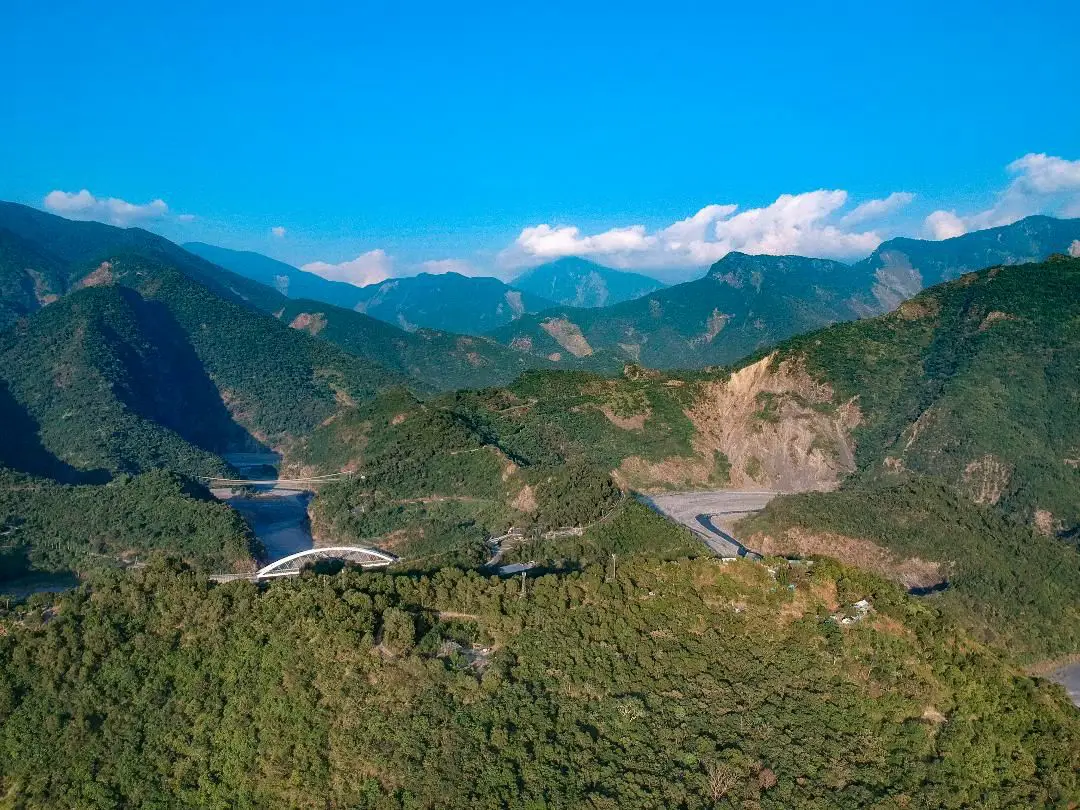
Maolin District of Kaohsiung City is an amazing outdoor paradise and my favorite place in Taiwan. In this mountainous district of Kaohsiung, you can find waterfalls, streams, hot springs, butterflies, aboriginal culture, and great views, all by the roadside! Popular activities include swimming, hot spring bathing, river tracing, camping, and hiking.
Please note I have also finished blogs about Maolin Village, Wanshan Village, Duona Suspension Bridge, and Duona Village (click the links to see each individual blog). Planning your trip to Kaohsiung? Here are some top travel tips for you:
Background: During the Japanese occupation, some of the original inhabitants of Maolin Village live in the mountains behind Wanshan Village. However later these aboriginals were forcibly moved to the current village. Many of the inhabitants were originally located elsewhere, but had to relocate their home or village due to typhoons or unsafe terrain. There are a few abandoned villages above the current village that you can still hike to. The villages have about 2000 total inhabitants, mostly aboriginals from the Rukai (魯凱族) Wulu Bunun (布農) and Paiwan (排灣) tribes, as well as some Han Chinese people. The district also has Maolin Middle school, the only middle school, and three elementary schools. Wanshan has the smallest population of any village in Taiwan according to the government website here, with a population of just 450 people. 95% of the people are aborigines from the Rukai Tribe (魯凱族), and the rest are either from the Wulu Bunun Tribe (布農) or Han Chinese. Originally the people of Wanshan village lived at the base of Mali Mountain (麻里山), but were moved by the government in 1956 to their current location. Many of the inhabitants of Maolin were originally located elsewhere, but had to relocate their home or village due to typhoons or unsafe terrain. There are a few abandoned villages around Maolin that you can still hike to. Typhoon Morakot brought record floods to Taiwan because it slowly moved over the island delivering torrential rain. Nearly 700 people were killed during the disaster (to see what Maolin looked like right after the flooding, check out this blog here). Basically all the bridges in Maolin were destroyed during Typhoon Morakot in 2009 except Duona Suspension bridge which is built so high that it would never be affected by floodwater. Most all the bridges currently in Maolin were reconstructed after the 2009 floods. Duona is the most remote village in Maolin District of Kaohsiung City, and is said to harbor the most complete version of the Rukai Aborigine culture. The Rukai People first began to move into the area now known as Duona about 300 years ago (1700s), making it one of the oldest aborigine villages in Taiwan. Most of the people live in traditional stone houses made from nearby plentiful shale rock, which are characteristic of the Rukai Tribe. The stone houses are warm in the winter and stay cool during the summer. Near the village is a small plain which is said to be the home of Taiwan's indigenous species of black rice. The village was almost completely cut off from the outside world until the Japanese built the Duona Suspension Bridge, which helped to link it to the rest of Taiwan as well as better control the native population. The actual Distrcit boundaries extend to Pingtung County and Taitung County, and include largely untouched and "virgin" forests and mountain wilderness areas such as Shuang-guei Lake, providing precious wildlife habitat for many of Taiwan's indigenous animals and plants. Price: Free Hours: 24/7 Maolin Butterfly Season: Maolin's Butterfly Migration is from September to March every year. Check out our full Maolin Butterfly Season Guide here. When to go: I recommend going in the summer time when the waterfalls have plenty of water and warm temperatures make it a great time to go swimming. In winter it will be cold and the waterfalls can dry up. On the other hand if you want to go just for hiking, winter would be a better time to go. If there is a Typhoon, the inhabitants of Maolin will be evacuated, and you should not try to go in for your own safety. If you are coming to see butterflies, the butterfly migration is in the fall and ends roughly in November. How to get there: By Car: Maolin can be reached via provincial highway 27 from Pingtung or Liugui. Once you come to Dajin Bridge, go straight up the mountain. Looking for scooter rental in Kaohsiung? You can check out Klook here or KKday here to search for options. You can check also out our scooter rental guide here. If you are looking for car rentals, you can search Qeeq here, KKday here, or Klook here. You can also check out our car rental guide here. By Bus: You can take a bus there but I don't recommend it. It's a 3 hour bus ride from Pingtung Bus Station. If you can rent a car or scooter it is about a 1 1/2 hour drive from Kaohsiung. You can book tickets to travel to Kaohsiung via inter-city bus on Klook here. You can book tickets to Kaohsiung via high speed rail (HSR) on Klook here or KKDay here. Book tickets via the normal train (TRA) on Klook here. You can also book a Kaohsiung Travel pass here. Accommodation We have stayed at and recommend Chao She Hotel (you can book on Agoda here, Booking.com here, Hotels.com here, or Expedia here) IHI Sanduo Travel Hotel (you can book on Agoda here, Booking.com here, Hotels.com here, or Expedia here), and Mingli Hotel (you can book on Agoda here, Klook here, or Hotels.com here) which are three inexpensive and high quality choices in downtown Kaohsiung. I also have stayed at and recommend Kaohsiung Meinong Rabbit Paul Homestay B&B (you can book on Agoda here, Booking.com here, or Trip.com here), a quiet B&B in rural Meinong, and Chengching Lakeside Resort (you can book on Agoda here, Booking.com or Trip.com here)and the Grand Hotel Kaohsiung (you can book on Agoda here, Booking.com here, Hotels.com here, or Expedia here) which both offer breakfast buffet and free entrance into Chenqing Lake Park. I have also stayed at the 85 sky tower which offers great views of the city; you can search for rooms in the 85 sky tower on Agoda here, Booking.com here, Hotels.com here, Expedia here, or Trip.com here). Find out more about where to stay in our Taiwan hotels guide or search for the best hotel deals in Taiwan here. We recommend booking through Agoda here, which provides the best quality selection of accommodation on the islands. You can also book Wifi and SIM cards for Taiwan on Gigago here. Need travel insurance? Compare prices on Insubuy here. Tours: You can find more tours and activities in Kaohsiung such as Pier 2, Meinong Hakka Museum, Hamasen Railway Museum, Suzuka Circuit Park, i-Ride Kaohsiung Visual 5D Flying Theater, National Science and Technology Museum , Senya Village Restaruant, Austin Land, Ski School Indoor Ski Slope, and many more on Klook here or KKday here. Just to let you know, if you book using the links above, we get some commission at no cost to you, and you can help support our blog. You can click here to receive $5 USD on your first Klook purchase. Map: Please see a map below marked with all the destinations we will visit in this blog:  From paperwork and public transport to finding an apartment and settling into local life, here is how to make your first four weeks in Taiwan a little easier.
Moving to Taiwan is exciting, but the first few weeks can also be surprisingly busy. Between figuring out the MRT, finding somewhere to live, arranging documents, and getting used to a new daily routine, it is easy to spend your first month running from one errand to the next. Meanwhile, the night markets, mountain trails, and cafés you came to enjoy are still waiting for you. The good news is that you do not have to get everything done at once. A few priorities are worth handling right away; others become much easier once you know your neighborhood. Whether you have come to Taiwan for work, school, family, or another long-term stay, the following guide can help you settle in without turning the whole month into a to-do list. Requirements vary depending on your immigration status and where you live, so confirm official procedures for your own situation. Days 1–3: Get Connected and Learn Your Neighborhood A working phone is one of the best things to sort out soon after arrival. You will use it for maps, translating addresses, messaging landlords, and occasionally showing a taxi driver exactly where you want to go. Airport SIMs and eSIMs can be convenient for the first few days, while a longer-term plan may make more sense once you know how long you will stay. Ask what identification the provider needs, especially if you want a monthly contract rather than a prepaid option. Next, get some New Taiwan dollars and a stored-value transport card such as an EasyCard or iPASS. These cards are useful on much of the local public transport network, including Taipei's MRT and many buses, and they can be topped up at familiar places such as convenience stores. Carry some cash too. Small restaurants, traditional markets, and neighborhood businesses do not always accept international cards. When taking a bus, pay attention to the card readers and follow the instructions for tapping on and off. Spend an hour walking around the area where you are staying. Find the nearest supermarket, convenience store, pharmacy, laundromat, and bus or metro stop. Save your address in Chinese on your phone; it is often more useful than an English-language map pin. If you are starting a new job or course, try the journey once before the first morning you actually need to be there. A ten-minute walk on a map can feel very different in Taiwan's summer heat or a sudden downpour. Week 1: Put Immigration and Health Paperwork in Order Do not assume that your visa, permission to reside, and permission to work are interchangeable. Depending on your circumstances, you may need an Alien Resident Certificate (ARC), a work permit, or a different form of authorization. Foreign nationals arriving with a resident visa generally must apply for an ARC within 30 days of entry; separate procedures can apply to students and to people changing their residence status. Check the National Immigration Agency's current instructions, and ask your employer or school which steps they handle and which are your responsibility. Keep a simple digital folder with your passport, entry documents, contract or enrollment letter, accommodation details, passport-style photo, and any receipts or application confirmations. You may not need all of these for every appointment, but having them together saves a lot of backtracking. Make sure your name, passport number, phone number, and address are consistent across forms. Small differences can slow down an otherwise routine visit. Health coverage is another question to resolve early, even if you feel perfectly healthy. Taiwan's National Health Insurance (NHI) is a major benefit of living here, but not every new resident is eligible immediately. Employees in qualifying jobs are typically enrolled through their employer from the start of employment, while many other eligible residents must first complete six months of residence under the applicable rules. Confirm your own enrollment date and make arrangements for medical coverage in the meantime. It is also worth locating a nearby clinic before you actually need one. Week 2: Find a Home That Works on Ordinary Days An apartment can look excellent in a listing and still be inconvenient to live in. Before committing to a long lease, visit the neighborhood at the time you expect to commute. Listen for traffic, check where the nearest grocery shops are, and consider whether you will still enjoy the walk home during heavy rain. A quiet side street can be more pleasant than a fashionable address that adds an hour to your working day. Rental advertisements often describe floor area in ping, with one ping equal to roughly 3.3 square meters. Ask how much of that area is actually usable, since some advertised measurements include a share of common spaces. Inside the property, test water pressure, inspect the air conditioner, look around windows and bathroom corners for damp patches, and find out how electricity is charged. Take photographs of any existing damage before moving in. For residential rentals, security deposits are generally capped at two months' rent, and repair responsibilities should be clear in the written agreement. There is also a less obvious side to making a place feel like home. The details in a first-hand account of moving to Taiwan touch on the things a property listing cannot really show, including humidity and the small routines of everyday life. Those details start to matter after the suitcases are unpacked. A room that feels fine during a quick daytime viewing may need better ventilation, a dehumidifier, or a conversation with the landlord about maintenance. Week 2: Set Up Your Money and Phone for Daily Life If you will be earning a salary, paying rent by transfer, or staying long term, a local bank account can make life much simpler. Banks commonly ask foreign residents for their ARC or other eligible residence document plus a second form of identification, such as a passport. A local phone number and proof of address may also be needed. People without an ARC can face different documentation requirements and restrictions, so contact the branch before you go. Allow plenty of time rather than squeezing the appointment into a lunch break. Ask a few practical questions while you are at the counter: Can the debit card be used for online purchases? Is internet banking activated separately? How do local transfers and international remittances work? The answers are more useful than simply walking out with an account number. Keep a little cash on hand while you wait for everything to be set up, and make room in your first month's budget for deposits, transport, household supplies, and unexpected fees. This is also a good moment to organize your phone. Save your landlord's number, your workplace or school's contact details, your bank's help line, and your building's address in Traditional Chinese. Taiwan uses traditional rather than simplified Chinese characters, so choose the appropriate language setting when you download a dictionary or translation app. Weeks 2–3: Learn the Local Routine One of the biggest adjustments may be rubbish collection. In many neighborhoods, residents take their waste out when the collection truck arrives rather than leaving bags on the curb whenever they like. Taipei has its own designated rubbish bags and scheduled collection rules, while other cities and buildings may use different systems. Ask your landlord, building manager, or neighbors where recycling, food waste, and ordinary rubbish should go. It is a small detail, but missing the collection time several evenings in a row gets old quickly. Food is the much more enjoyable part of settling in. Try the breakfast shop near your home, learn the lunch options around work, and visit a local market before making the same purchases at a large supermarket. Convenience stores are useful for far more than snacks, but smaller shops and food stalls are often where you start to feel at home in a neighborhood. There is no expectation to tip at most everyday restaurants in Taiwan, and a friendly thank-you goes a long way. A little Mandarin makes errands more comfortable, even if you are far from fluent. Start with 請問 (qǐng wèn, 'may I ask'), 不好意思 (bù hǎo yì si, 'excuse me'), and 謝謝 (xiè xie, 'thank you'). Learn the words for your food preferences and your address, then add a phrase whenever you find yourself wishing you knew how to say something. In central Taipei, English can get you through many situations; elsewhere, knowing a few words can be especially helpful. Week 3: Build a Life Beyond ErrandsIt is possible to be busy every day in a new country and still feel a little isolated. Once the urgent jobs are done, start making a routine that includes other people. Join a language exchange, find a sports club, volunteer, attend a community event, or invite a classmate or coworker for lunch. You do not need a huge group of friends in the first month. One or two familiar faces can make a new city feel much smaller. Notice how people around you handle everyday situations. Queueing is taken seriously, public transport is generally quiet, and crowded streets require attention to scooters turning across side roads. At temples and other places of worship, be considerate of ongoing ceremonies and follow signs about photographs. Being observant is usually more useful than memorizing a long list of supposed cultural rules. Leave some unscheduled time, too. Taiwan has a lot to explore, but you do not have to visit every famous attraction immediately. Sometimes the nicest evening is simply discovering a good noodle shop around the corner and finally remembering which exit to use at your metro station. Week 4: Explore a Little, Then Review What Still Needs Doing By the fourth week, give yourself a day away from the administrative side of moving. If you are in Taipei, a trip to Tamsui, a walk around Beitou, or a short hike in the nearby hills can offer a welcome change of pace. Residents of Taichung, Tainan, Kaohsiung, and other cities have plenty of local outings of their own. Choose somewhere you can comfortably visit in a day, check the weather, and leave enough time to return without rushing. Trains and buses make many trips easy, but timetables and trail conditions are worth checking before heading out. Then take stock of the essentials. Do you know when your immigration documents expire? Is your health insurance situation clear? Can you pay rent and other regular bills? Have you saved the location of a clinic, and do you know how your building handles rubbish and deliveries? Make a note of any loose ends and deal with those that have deadlines first. The goal is not to have a perfect system; it is to stop the same little problems from interrupting every week. Taiwan is also a place where weather deserves attention. Heavy rain, typhoons, extreme heat, and earthquakes can affect ordinary plans. Follow announcements from the Central Weather Administration and local government, learn the safety procedures for your home and workplace, and keep basic supplies such as drinking water and a charged power bank available. That is sensible preparation, not a reason to worry constantly. Your First-Month Checklist There is no single timetable that fits every newcomer, but the following order works well for many people: • First three days: Get mobile data, some local currency, a transport card, and a clear idea of your route home. • First week: Confirm immigration deadlines, organize documents, and understand when health coverage begins. • Second week: Check housing carefully, clarify the lease, and arrange the banking services you need. • Third week: Learn local rubbish collection, build a few useful Mandarin phrases, and make time to meet people. • Fourth week: Enjoy a nearby day trip, prepare for local weather, and close out the remaining urgent tasks. Final Thoughts Your first month in Taiwan will probably involve a few wrong exits, unfamiliar forms, and meals ordered mostly by pointing at pictures. That is part of the experience. Handle the time-sensitive paperwork early, pay attention to how your neighborhood works, and give yourself permission to learn the rest gradually. The best sign that you are settling in is not that you have seen the whole island. It is that an ordinary Tuesday in Taiwan is beginning to feel like your own. 
Here is a list of other Taiwan Blogs that we think are of note, as well as our list of blog lists (bloggoramma), and vlogs. We will keep this updated as best we can. Websites that are no longer online will be deleted. If you feel that you should be on this list, please let us know.
Blogs: Taipei is an easy city to get comfortable in. After a while, familiar cafés, favourite restaurants and the same handful of weekend destinations can become part of the routine. Yet Taiwan's relatively small size means there is little reason to spend every Saturday and Sunday in the capital. A short train ride can take you towards mountain villages, old streets, coastal landscapes and quieter corners that rarely feature on a first-time visitor's itinerary. For expats who have already seen the obvious day-trip destinations, the more interesting question is where to go next. Miaoli, Hsinchu, Yilan and the northern coast all provide alternatives, while further trips can take you towards hot springs, forested hills and rural communities. None requires an elaborate expedition, which makes them particularly suitable when Friday evening arrives and you simply want a change of scenery.  https://unsplash.com/photos/taipei-101-skyline-and-river-TGaVL5rwwd4?utm_source=unsplash&utm_medium=referral&utm_content=creditShareLink
Miaoli's Slower Side Miaoli is often overlooked in favour of better-known destinations, but that is precisely what makes it appealing for a low-key weekend. The county is known for its Hakka heritage, rolling hills and agricultural landscapes, with small towns and villages scattered between the larger urban centres. The Miaoli to Taipei train is also useful for those travelling in the opposite direction after a weekend away, making rail travel a convenient part of the trip. Once outside Taipei, the pace changes noticeably. Instead of squeezing several attractions into one day, you can explore a market, visit a local temple, walk through a historic neighbourhood and leave plenty of time for a long meal. Hsinchu Beyond the Science Park Hsinchu is often associated with Taiwan's technology industry, but there is considerably more to the city than offices and research campuses. Its historic centre contains old temples, traditional streets and food stalls, while the surrounding area offers access to hills and rural communities. For commuters accustomed to seeing the city only during working hours, taking Hsinchu to Taipei trains in the opposite direction can reveal a completely different side of the region. A weekend allows enough time to explore without treating Hsinchu as a checklist of attractions. The City God Temple area is a good place to start, particularly for anyone interested in local food and everyday Taiwanese culture. The Old Streets of Sanxia and Yingge You do not always need to leave the wider Taipei area to find somewhere that feels different. Sanxia and Yingge are close enough for a relaxed weekend excursion, yet their historic streets and traditional industries create a noticeably different atmosphere. Sanxia Old Street is known for its red-brick architecture and restored shopfronts, while nearby temples add another layer of history. Yingge has a long association with ceramics, and its museums, studios and shops make it a natural destination for anyone interested in craft. The two towns can be combined, but there is also enough to explore slowly rather than racing between them. Yilan for Mountains, Hot Springs and Sea Air Yilan is one of the easiest choices for a weekend when city life starts feeling repetitive. Mountains surround the plain, while the Pacific lies to the east, creating a landscape that feels remarkably open compared with Taipei's dense urban centre. Jiaoxi is particularly popular for its hot springs and can work well for an overnight stay. Rather than building the weekend around a long list of sights, visitors can divide their time between soaking, eating and taking short walks. Yilan City and the surrounding countryside provide further options for food and cycling, while the coast is within reach for those who want a different setting. A Coastal Weekend in Keelung Keelung is sometimes dismissed as a rainy port city, but its weather is part of the character of the northern coast. The harbour gives the city a strong maritime identity, while the surrounding hills create viewpoints and walking routes that are easy to reach from the urban centre. The Miaokou Night Market is the obvious evening stop, particularly for anyone who enjoys trying several small dishes rather than sitting down for a formal meal. During the day, the surrounding coastline provides plenty of reasons to stay longer. Nearby rock formations, fishing communities and coastal parks make it possible to combine food with outdoor exploration. Wulai When You Need Green Space Wulai is another option for escaping Taipei without committing to a long journey. The mountain town is surrounded by forest and is particularly well known for hot springs and waterfalls. Its setting makes it feel considerably farther from the capital than it actually is. The old street is lined with food stalls and shops selling local products, while trails lead into the surrounding hills. The area is also closely connected with Atayal culture, giving visitors an opportunity to learn more about one of Taiwan's Indigenous peoples. A weekend here can be as active or relaxed as you choose. The Northern Coast Without the Crowds For a simple change of scenery, the northern coastline is hard to beat. Instead of concentrating on one famous attraction, consider choosing a few smaller stops and travelling at an unhurried pace. Fishing harbours, coastal paths and small villages provide plenty of variety. Jinshan and Wanli are useful bases for exploring this part of Taiwan, particularly for travellers who want seafood and ocean views. The landscape becomes especially dramatic in poor weather, when waves hit the rocky shoreline and mist settles across the hills. It is a reminder that Taiwan's natural scenery does not always need sunshine to be impressive. Making Short Trips Feel Like Proper Holidays One reason people stop exploring nearby destinations is the assumption that a weekend away needs to be complicated. In reality, the best short trips often involve fewer plans. Choose one area, find accommodation close to the places you want to see and allow enough time for meals, wandering and unexpected discoveries. Public transport makes many destinations around northern Taiwan accessible, but checking the final connections is worthwhile, particularly if you are heading into rural areas. Renting a car can make some countryside itineraries easier, although it is not essential for many of the towns and cities mentioned here. Seeing More of Taiwan From Taipei Living in Taipei makes it tempting to judge weekend destinations by how famous they are. That can mean repeatedly returning to the same handful of places while overlooking towns that have their own histories, food traditions and landscapes. Miaoli, Hsinchu, Yilan, Wulai, Keelung and the northern coast all demonstrate how much variety exists within a short distance of the capital. Some trips are about hot springs, others about food or architecture, while a few simply provide the chance to wake up somewhere quieter. For expats who have already settled into Taipei life, that variety can be exactly what makes the next weekend feel different. |
Author 作家I am an American expat who has extensive experience living, working, and traveling in Taiwan. In my day, I had to learn many things about Taiwan the hard way. But I have come to learn that Taiwan is one of the best places in the world for Foreigners to live. This blog does not represent the opinions of every foreigner in Taiwan. I am just trying to help others learn more about this beautiful country. Categories
|

- Home
- Travel Guides
-
Taiwan FAQ
-
Blog
- Blog Feed
- Blog Index
- Taiwan Travel Blog
-
Global Expat Travel Blog
>
- Hakka Kitchen
- Bank Comparison
- Snow Hakka
- Mid-Autumn Festival
- Ghost Month
- Taiwan Vs. Thailand
- Morakot
- Gaemi
- Mango Guide
- Sand Fest
- TD 19
- Krathon
- Typhoon Kong-Rey
- Shen'ao Railbike
- Museum of World Religions
- Nanjichang Night Market
- Popsmile Tourist Factory
- Taiwan Science Center
- Taiwan Better Than Thailand
- Hualien Besides Taroko
- Taiwan Car Rental Guide
- Lunar/Chinese New Year Guide
- Taiwan Lantern Festival Guide
- Tomb Sweeping Festival
- Taiwan Cherry Blossom Guide
- Children's Day
- Firefly Guide
- Maps
-
About
- About
- Contact
- Twitter (X)
- YouTube
- Current Time and Date in Taiwan
- Privacy
-
More
>
-
Taiwan Travel Blog Posts
>
- Guide to Taiwan
- Taiwan’s Outer Islands. >
- Taiwan Cycling Guide – The Ultimate Guide to the Bicycle Kingdom 台灣騎自行車指南
- The Ultimate Taiwan Scooter/Motorcycle Rental Guide 在臺灣租機車
- The Ultimate Taiwan Car Rental Guide – Save Money on Your Next Trip 臺灣租汽車指南
- Camping in Taiwan Guide – Everything you Need to Know 在台灣露營常見問題
- Taiwan Blogroll – Top English Blogs to Follow for All Things Taiwan
-
The Ultimate Travel Guide to Taipei 臺北旅遊指南
>
- Yangmingshan National Park 陽明山懶人包 – Your Complete Travel Guide
- Ultimate Guide to Taipei’s Old Streets 台北老街指南
- The Ultimate Travel Guide to Pingxi and Shifen 平溪懶人包
- The Ultimate One-Day Taipei Itinerary 一天在臺北怎麽旅遊
- The Ultimate Guide to Taipei’s Night Markets 臺北夜市指南
- The Most Awesome Day Trips from Taipei 台北一日遊景點
- The Complete 2025 Beitou Hot Springs Guide: Soak Like Royalty 北投溫泉英文指南
- The Best Views of the Taipei 101 (Best Places to see New Year’s Fireworks) 欣賞101煙火的最佳地點
- The Best Beaches Near Taipei: North Taiwan’s Top 10 台北前10名的沙灘 >
- Tamsui Travel Guide – Taipei’s Amazing Historic Riverside Town 淡水最佳的景點
- Taipei’s Waterfall Guide – Explore the City’s Most Breathtaking Falls 台北瀑布指南
- Taipei Museum Guide – Discover the Best Museums in Taipei 臺北博物館指南
- Taipei City Hiking Guide – The Best Hikes in Taipei 台灣爬山指南
- Taipei 101: The Ultimate Guide to Taiwan’s Tallest Tower (臺北101)
- Shifen Waterfall and Old Street Travel Guide: Everything You Need to Know Before You Go
- Qingtiangang Grassland: See Amazing Views and Buffalo Close-Up 擎天崗
- Our Travel Guide to Wulai – Taipei’s Amazing Mountain Paradise (烏來旅遊指南)
- Jiufen Old Street – Taiwan’s Amazing Mountainside Village 九份老街
- Dihua Street and Dadaocheng – Taipei’s Amazing Historical Hipster Paradise 迪化街及大稻埕
- Children and Parent’s Travel Guide to Taipei 小孩及家長台北旅遊指南
- Taiwan’s Northern Coast Travel Guide – Discover a Beautiful and Amazing Coastline 台灣北海岸懶人包 >
- Keelung Travel Guide – Best Places to See in the Harbor City 基隆旅遊指南
- Taoyuan Travel Guide – More Than Just an Airport City 桃園旅游懶人包
- Travel Guide to Hsinchu 新竹懶人包 – Taiwan’s Charming Tech Hub
- Miaoli Travel Guide – Discover this Amazing Mountainous Backwater 苗栗旅遊懶人包 >
- Taichung Travel Guide 台中旅遊懶人包 – Discover Central Taiwan’s Hidden Secrets
- Gaomei Wetlands – Complete Guide to Taichung’s Amazing Wildlife Area 高美濕地
- Nantou Travel Guide – Taiwan’s Most Stunning Mountain Getaway 南投縣懶人包
- Sun Moon Lake Travel Guide – Taiwan’s Most Beautiful Lake 日月潭旅游指南
- Changhua Travel Guide – Fall in Love with Taiwan’s Historical Central County 彰化懒人包
- Chiayi Travel Guide – Best Places to Visit, Eat & Explore 嘉義懶人包
- Alishan 阿里山 – Taiwan’s Ultimate Mountain Destination
- Alishan Forest Railway Travel Guide (阿里山森林鐵路) – Taiwan’s Most Scenic Rail Line
- Yunlin Travel Guide 雲林旅遊懶人包 – A Rural Wonderland in Southwest Taiwan
- Tainan Travel Guide: Discover Taiwan’s Oldest City & Ultimate Foodie Paradise – 臺南懶人包
-
Travel Guide to Kaohsiung – Southern Taiwan’s Most Vibrant City 高雄旅遊懶人包
>
- Tianliao Moon World Travel Guide 田寮月世界 – Taiwan’s Out-of-this-World Geopark
- Qijin (Cijin) Island Travel Guide – Koahsiung’s Best Beach Destination 旗津懶人包
- Maolin Travel Guide 茂林旅游懶人包 – Our Favorite Place in Taiwan
- Monkey Mountain (Shoushan) 壽山 – Taiwan’s Best Monkey-Spotting Location
- Lotus Pond Travel Guide 蓮池潭 – Kaohsiung’s Scenic Temple Area
- Cheng Ching Lake Ultimate Travel Guide 澄清湖完整導覽
- Pingtung Travel Guide – Explore Taiwan’s Sunniest County 屏東旅遊懶人包
- Kenting Travel Guide 墾丁懶人包 – The Best Beaches in Taiwan
- Travel Guide to Yilan 宜蘭懶人包 – Beaches, Mountains, Hot Springs, and more
- Guide to Toucheng 頭城懶人包 – Yilan’s Amazing Seaside Paradise
- Taipingshan Travel Guide 太平山 – Discover Yilan’s Amazing Mountain Scenery
- Our Guide to Taiwan’s East Coast 台灣東海岸指南 – Taiwan’s Most Beautiful Coastline
- Taiwan’s East Rift Valley (Huadong Valley) Travel Guide 花東縱谷旅遊指南 – The Most Beautiful Places in Taiwan
- Taitung Travel Guide – Top Things to Do in Taiwan’s Outdoor Tourism Paradise 台東懶人包
- Taiwan National Public Holiday Guide 台灣國定假日指南
- The Ultimate Taiwan Hotel Guide 臺灣飯店指南
- The Ultimate Taiwan SIM Card, eSIM, and Portable Wi-Fi Guide
- The Ultimate Taiwan Transportation Guide 台灣交通常見問題
- The Ultimate Taiwan Butterfly Watching Guide 台灣賞蝴蝶指南
- The Ultimate Foreigner’s Guide for Surviving in Taiwan 外國人在台灣存活指南
-
Taiwan Travel Blog Posts
>
 RSS Feed